Apps Will Soon be Replaced by AI
Jakob Nielsen has been studying how people use computers since before most of us had one. He founded the Nielsen Norman Group in 1998, wrote the foundational text on web usability, and spent three decades watching every major shift in how humans interact with machines. And he argued in 2023 that AI represents the first genuinely new interface paradigm in over sixty years.
His framework is straightforward. In the entire history of computing, there have been only three ways humans have interacted with machines.
- The first was batch processing, starting in 1945. You wrote instructions on punch cards, handed them to an operator, and came back the next day for your results.
- The second was command-based interaction, starting around 1964 with time-sharing terminals. You and the computer take turns. You type a command, the computer responds, you type another.
- The third is intent-based outcome specification, starting around 2023 with large language models. You tell the computer what you want, and it figures out how to get there.
The surprising part of Nielsen’s argument is what doesn’t count as a new paradigm. GUIs? Still command-based. Touchscreens? Command-based. Voice assistants like the original Siri? Command-based. The interface got prettier over the decades and the input method changed from typing to tapping to swiping to speaking, but the fundamental relationship between you and the machine stayed the same for sixty years.
AI changes the game. When you tell an AI “plan me a weekend trip to Portland,” you aren’t clicking through a travel app one screen at a time. You’re describing what you want and leaving the execution to the machine. Nielsen calls this “intent-based outcome specification.”
Why do people other than philosophers of technology care? Because every interface paradigm produces its own dominant form of software. If we’ve entered a new paradigm — and with ChatGPT going from zero to 900 million weekly users in three years, the data suggests we have — it’s worth asking what that means for us.
Apps are going away
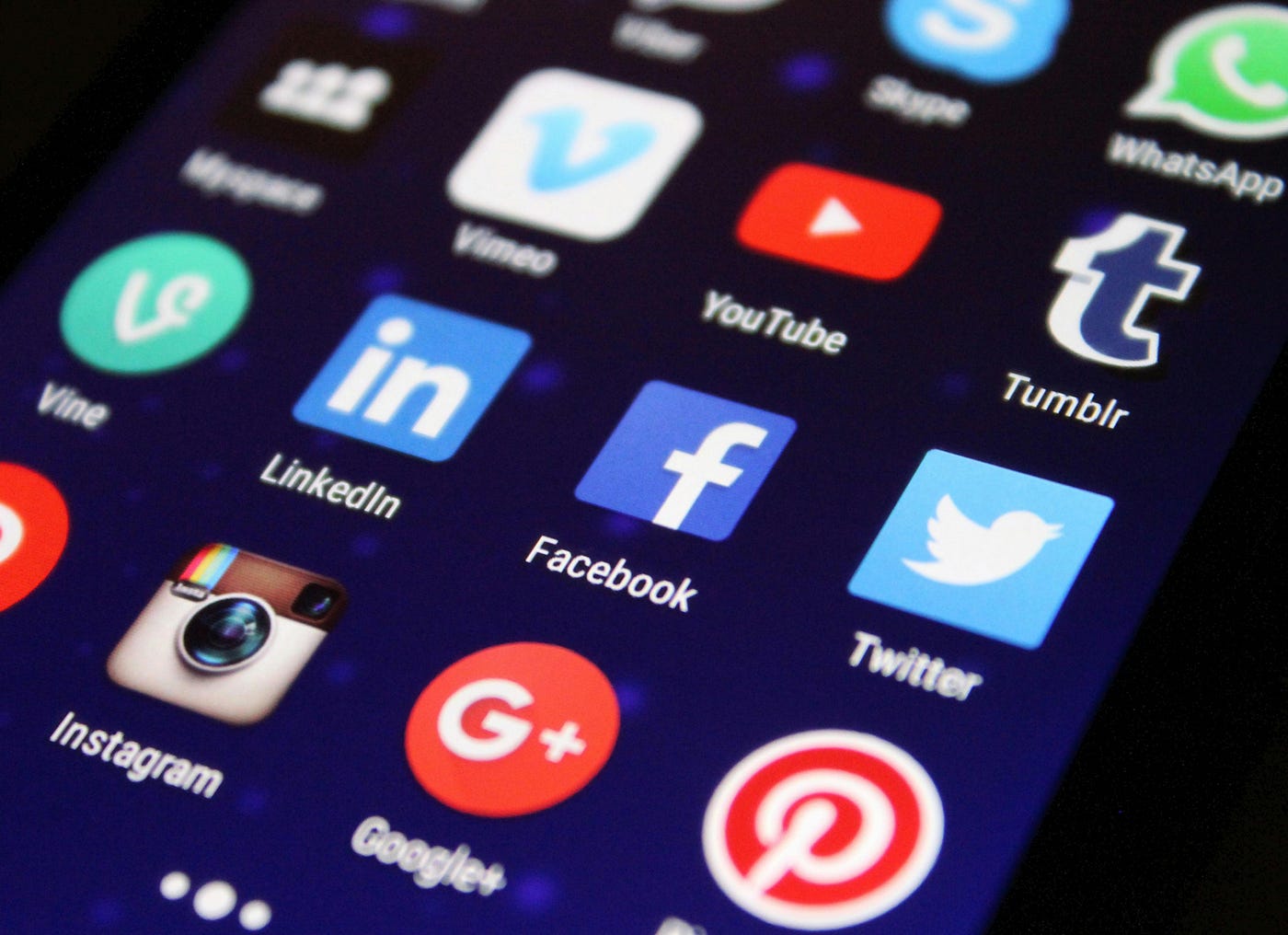
App downloads have declined for five consecutive years, falling from a peak of about 135 billion in 2020 to 107 billion in 2025. Google Play purged 47% of its apps in a single year, dropping from 3.4 million to 1.8 million between early 2024 and early 2025. The platforms themselves know their model is bloated.
The apps that survived the purges aren’t much better off. Ninety percent of users abandon an app within thirty days of downloading it, and the top one percent of publishers capture 91% of all app store revenue, leaving the vast majority of developers fighting over scraps.
Consumer spending, meanwhile, is up. People spent $155.8 billion in app stores in 2025, a 21% increase over the year before even as downloads fell. That money is flowing through fewer apps, driven by subscriptions and in-app purchases from an increasingly narrow set of winners. The app economy may be growing, but it’s concentrating.
While the app economy hollows out from below, the platforms are absorbing it from above. Apple has a practice the industry calls “sherlocking,” where it builds features into iOS or macOS that replicate what a popular third-party app already does.² In 2024 and 2025 alone, Apple sherlocked password managers, package tracking, flight tracking, clipboard managers, menu bar organizers, podcast recording tools, and spam call blockers. Microsoft bundled Teams into Office 365, growing it to 320 million monthly users before the EU forced them to unbundle it after an antitrust complaint from Slack. Notion swallowed calendars and email. Grammarly acquired Coda and Superhuman.
None of this is new. Netscape Navigator held 80% of the browser market in the mid-1990s before Microsoft bundled Internet Explorer into Windows and drove it to near-zero. Winamp and RealPlayer thrived as standalone media players until the operating systems absorbed their functionality and streaming made the whole category irrelevant. This pattern is older than computers. After Alexander Graham Bell’s telephone patents expired in 1893, over six thousand independent telephone companies sprang up across the United States, and AT&T spent the next fifteen years systematically acquiring them.
Your AI doesn’t open apps
When you want to play a song, you open Spotify, search for the track, and hit play. When an AI does the same thing on your behalf, it doesn’t do any of that. It calls Spotify’s code directly, skipping the buttons and the album art entirely. The visual layer — everything you think of when you think of an “app” — exists only for human benefit.
What AI uses instead is a Model Context Protocol (MCP), a standardized way to talk to software. When Anthropic released it in late 2024 as an open standard for connecting AI to external tools, it was adopted faster than anyone expected. Monthly downloads of the MCP development kit went from 2 million at launch to 97 million by the end of 2025. It’s now natively supported by Claude, ChatGPT, Gemini, Microsoft Copilot, and dozens of development tools. In December 2025, Anthropic donated MCP to the Linux Foundation, where it’s governed by a coalition that includes Anthropic, OpenAI, Google, Microsoft, and AWS.
The behavior shift is already showing up in surveys. A 2025 TELUS Digital study found that 32% of consumers have replaced at least one traditional app with an AI assistant in the past year. Among early technology adopters, it’s over half. Eighty-three percent of those who’ve made the switch say AI completes tasks faster than the apps did.
The new app stores are for AI, not people
The app store isn’t disappearing, it’s relocating. Instead of living on your phone’s home screen, the marketplace for software is moving to your AI’s tool list. Claude Desktop already has a built-in extension store where you can browse and install AI-compatible tools with a single click. Visual Studio Code lets you search and install them from its Extensions sidebar. Third-party directories have proliferated, with the largest ones listing over 20,000 available tools. There are more than a dozen competing directories, all scrambling to become the place where AI finds its software.
Most of these tools are still free and open source, but the commercial layer is growing fast. Enterprise AI tools from companies like Snowflake and Atlan already charge $1,000 to $5,000 a month. Individual developers building AI tools report earning $3,000 to $10,000 monthly. Platforms are appearing that offer revenue splits that look a lot like early app store economics. Developers are literally titling their blog posts “MCP Servers Are the New SaaS.”
The ecosystem is somewhere between finding software packages on SourceForge in 2002 and browsing the App Store in 2010. It’s early, it’s messy, and a lot of it has security problems that the industry hasn’t solved yet, but the pattern is unmistakable. The marketplace for software is rebuilding itself around AI as the primary user, not you.
What this means for smartphones
If the primary way you interact with software is talking to an AI, you don’t need a big screen or a keyboard. A phone is enough.
The phone was already becoming the primary computer for many people.³ In the U.S., forty-five percent of knowledge workers consider their smartphone their primary work device. Among Americans aged 18 to 29, nearly a third don’t own a laptop at all.
Those numbers reflect phones absorbing the easy tasks: email, social media, banking, photos. The work that still sent people to a laptop was the stuff that required sustained typing, research across multiple sources, or wrangling a spreadsheet. Tasks that demanded a big screen and a keyboard because you were the one doing the operating.
That’s exactly the category of work AI handles through conversation. You don’t need a laptop to write a document if you’re describing what you want to an AI that drafts it. You don’t need a spreadsheet app if you can say “track my expenses this month and flag anything unusual.” Apple signed a deal worth roughly a billion dollars a year to put Google’s Gemini behind a rebuilt Siri, expected later in 2026. Over 30% of smartphones shipped in 2025 came with on-device AI capabilities.
The phone was already a personal computer for a growing number of people. AI is absorbing the last category of tasks that justified owning another.
There are real reasons this transition won’t happen overnight. The biggest is trust. Only 24% of people trust AI assistants with their personal data, compared to 50% who trust traditional apps. People prefer apps for banking and shopping by wide margins, and the hesitation is reasonable. AI systems hallucinate, make mistakes, and have data practices most users can’t evaluate.
The implementation gap is real too. Apple has been promising a conversational, context-aware Siri for over two years and has repeatedly delayed it, acknowledging that the features “didn’t meet reliability standards.” If the company with the most tightly integrated hardware-software ecosystem in the world can’t get this right on schedule, it’s going to be bumpy for everyone else. Forrester estimates that over 40% of agentic AI projects will be canceled by the end of 2027.
And visual interfaces aren’t going anywhere for certain kinds of use. Watching a video, browsing a photo library, and scrolling through an article like this one are tasks that need a screen and a visual layout, and no amount of conversational AI changes that.
But most of the two million apps in the App Store exist to help you do things, not watch things, and doing things is exactly what AI handles well.
The App Store launched in July 2008 with 500 apps. “There’s an app for that” became the answer to every computing problem for the better part of two decades. Download a separate program for every task, each with its own interface, its own login, its own notification settings, and its own monthly subscription.
That model has started to crack. Not dramatically, and not for most people yet, but it has. Fifty-eight percent of consumers say their app usage hasn’t changed at all, and only a third have replaced even one app with an AI. But a different way of interacting with software is growing underneath the old one, and it doesn’t need the things apps were built to provide. You describe what you need, and the AI figures out which tools to use and how to use them. All those carefully designed screens were built for a user who was doing the operating, and slowly, that user is becoming an AI instead of you.
¹ Nielsen himself expects the future to be hybrid, combining intent-based and command-based interfaces rather than replacing one entirely. He also notes that current AI has “significant usability problems” and that roughly half the population in wealthy nations may lack the writing skills for effective AI interaction.
² The term comes from a 2000s-era Apple application called Sherlock that replicated the functionality of a popular third-party tool called Watson. It has since become shorthand across the tech industry for any time a platform owner absorbs the functionality of a third-party app.
³ This section is intentionally restricted to U.S. statistics about people who have choices. Globally, the trend toward smartphone-only computing is much stronger, but it’s driven by economics. In much of Africa and South Asia, smartphones are the first and only computer most people have ever owned, not because they chose phones over laptops but because laptops were never affordable. Even within the U.S., smartphone-only internet use skews heavily toward lower-income and less-educated populations.
AI was used in the writing of this article.
Enjoy this kind of writing?
I send one email a week about AI, intentional living, and doing meaningful work in a world that won't stop changing. Join 700 other subscribers.
Keep Reading
Your Clothes Use More Water Than Your AI
The environmental case against AI doesn't survive contact with the data
AI Is Building the Biggest Porn Machine in History
The industry that monetizes child rape videos just got mechanized production
AI Will Transform the Economy, but the Safety Net Isn't Ready
AI will cure diseases and end drudge work, but the transition is going to hurt