A Jury Concluded Meta Built Instagram to be Addictive to Children
For those of us who grew up before the age of social media, we imagine childhood as an innocent time. Sure, we had internet access, but we had to sit at the family computer to use it and the most exciting thing we did was play flash games.
Childhood is not like that anymore. Consider, for example, Kaley’s story.
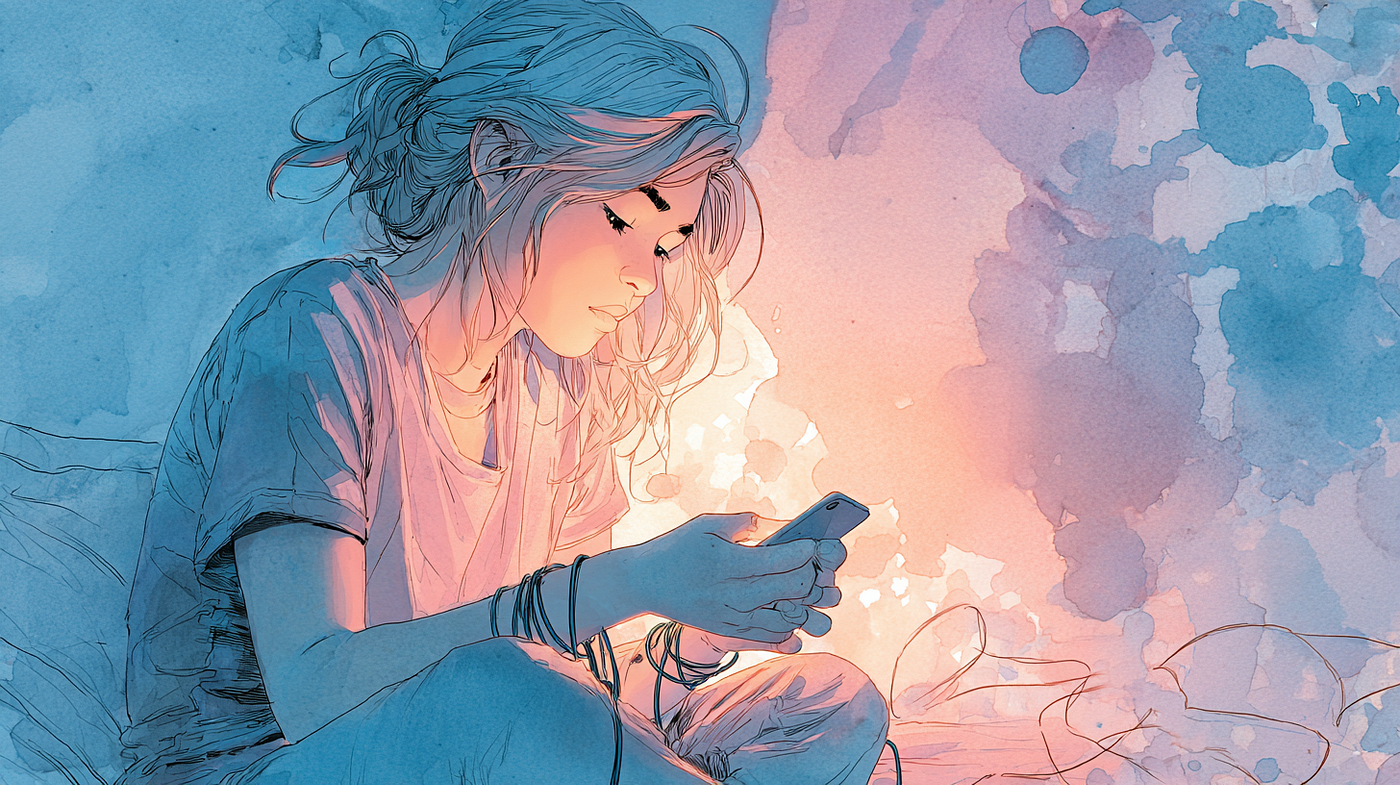
Kaley was six when she started watching YouTube. By the end of elementary school, she had posted 284 videos of herself.¹ She was nine when she created her first Instagram account, lying about her age to get past the thirteen-and-over requirement. By middle school, she was on Snapchat and Musical.ly too, opening the apps first thing when she woke up and last thing before she slept. Running around in the forest, smashing up random wildflowers to make “dye” and coming home covered in mud was not a part of her childhood experience.
Like a typical middle schooler, she was concerned about her reputation — so she created multiple accounts so she could like and comment on her own posts. She bought likes through third-party services. “It made me look popular,” she later testified. She put beauty filters on nearly every photo — hundreds of them, enough to fill a thirty-five-foot canvas banner that her lawyers would one day unfurl in a courtroom.
“When I got a bunch of likes, I was really happy,” she said. “If I didn’t get a lot of likes, I would feel I shouldn’t have posted it, I was ugly.”
When her mother tried to take her phone, she would scream and cry. “Without it, I felt like a huge part of me was missing.” Being offline bothered her more than the cyberbullying. It even bothered her more than the sextortion.² Kaley kept going back anyway. On at least one occasion, she spent sixteen hours in a single day on Instagram. Not sleeping, not eating healthy meals, not seeing friends. Just scrolling.
She started cutting herself in sixth grade. She developed depression, anxiety, and body dysmorphia. Her sister was hospitalized for an eating disorder. “I didn’t feel bad about my body before I started using social media,” Kaley testified. At twenty, she still spends three to four hours each morning on her appearance.
In February 2026, she sat in a Los Angeles courtroom and told this story to twelve strangers. In court records, she is identified only by her initials: K.G.M. She filed the lawsuit three years earlier, at seventeen. She is now twenty, working as a personal shopper at Walmart.
She is a stand-in for the millions of people who have been damaged in exactly the same way.
The Medium Is the Harm
On March 25, 2026 — a month after Kaley’s testimony — the jury came back. They found Meta and YouTube negligent in the design of their social media platforms. The jury awarded six million dollars in damages.
That’s nothing to these companies, but the dollar amount is not the point. The point is that for the first time, a jury looked at the design of a social media platform — not the content users posted, but the engineering decisions made by the people who built it — and concluded the design itself was addictive, and that Meta and YouTube built it that way intentionally.
The judge instructed the jury that how content is delivered is a separate question from what the content is, based on the work of media philosopher Marshall McLuhan, who observed in 1967 that the medium in which communication takes place shapes the experience as much as the communication itself. For instance, a book implies a topic is complicated and requires deep thought to understand. A movie, on the other hand, suggests the content will be more emotional and less intellectually complicated.
When the communication medium is social media, things get dangerous. Because not only is social media very short and highly visual, inclining people to act as if everything can be understood in a post, companies like Meta have actively designed their platforms to be emotionally activating and addictive. Multiple books have been written recently on this topic:
- In Superbloom (2025), Nicholas Carr explains that when a platform algorithmically decides what you see based on what will keep you engaged longest, it is no longer passively hosting content. It is shaping what you think.
- In Stolen Focus (2022), Johann Hari frames the same crisis in economic terms. Attention is a resource, and it is being mined. Social media companies make money when you look at a screen and lose money when you don’t. Every engineering decision flows from that incentive. The algorithms aren’t neutral arbiters of interesting content, but are engagement-maximization engines — and your mental health is an externality that doesn’t appear on the balance sheet.
- In The Anxious Generation (2024), Jonathan Haidt provides the data on what this engineering has done to children, tracing the rise of smartphone-based social media alongside measurable increases in anxiety and depression.
This malicious design has produced an ever-increasing list of tragedies:
- In 2017, Myanmar’s military carried out a genocide against Rohingya Muslims. A United Nations Fact-Finding Mission concluded that Facebook had played a “determining role.” For most people in Myanmar, Facebook was the entire internet — their news, their messaging, their search engine. Military-linked accounts used it for years to spread hate speech and coordinate violence. Facebook had two Burmese-speaking content moderators for eighteen million users. The company later conceded it had not done enough. Mark Zuckerberg apologized. Nothing changed.
- In 2021, Frances Haugen, a former Facebook data scientist, leaked thousands of internal documents. Among them: Facebook’s own research showing that thirteen and a half percent of teen girls in the UK reported more frequent suicidal thoughts connected to Instagram. Seventeen percent said Instagram contributed to their eating disorders. Thirty-two percent of girls who already felt bad about their bodies felt worse after using the app. Facebook knew this. They were simultaneously developing Instagram Kids for children under thirteen. Haugen testified before Congress. Senators expressed grave concern. Nothing happened.
- In 2022, a London coroner concluded that fourteen-year-old Molly Russell “died from an act of self-harm while suffering from depression and the negative effects of online content.” The inquest found that in the six months before her death, she had interacted with over two thousand pieces of depression, self-harm, and suicide content on Instagram. When Meta’s head of health and well-being policy was asked whether this material was safe for a child, she answered: “I don’t find it a binary question.”
Molly Russell was not an anomaly. She was a data point in a pattern that the companies’ own internal research had already documented. They knew what their platforms were doing to young people. They published studies internally and suppressed them externally. They kept optimizing for engagement because engagement is revenue, and revenue is the only metric that has ever actually governed their decisions.
Until now, Meta and Google have sheltered from these realities behind Section 230 of the Communications Decency Act, which shields platforms from liability for user-generated content. The law was written in 1996, when platforms weren’t addictive by design, and very few people even used them. Section 230 made sense for that world, but we haven’t been living in that world for a long time.
The KGM case took this body of work and built a legal theory around it. It didn’t challenge Section 230, but went around it. The prosecution’s claim wasn’t “you hosted bad content,” it was “you built a machine that is, by design, dangerous.”
One saidallegedly found that children who had already experienced adverse effects
The lead attorney told the jury: “How do you make a child never put down the phone? That’s called the engineering of addiction.”
Twelve people heard the evidence, deliberated for forty-four hours, and found Meta guilty of doing this on purpose.
How These Platforms Alter Your Mind
I know I’ve said “social media is bad for you” a lot, so I want to be precise: These companies build systems that exploit known vulnerabilities in human psychology to maximize the time users spend on the product. Variable-ratio reinforcement (the same mechanic that powers slot machines) keeps you refreshing to see if you got new likes. Infinite scroll removes the natural stopping cues that every other medium provides. Algorithmic content surfacing learns what provokes the strongest emotional response and serves you more of it, because emotional arousal drives engagement, and engagement drives ad revenue.
These aren’t accidental side effects — they are the product. Content is merely incidental. And as McLuhan observed, this machine doesn’t just waste your time. It installs a worldview.
This is the part it took me years to understand. I deleted all my social media over seven years ago now, but these companies spent years training me to see myself a certain way: as a series of selfies, a consumer of products, a collection of diagnoses, a victim of forces beyond my control. That way of seeing didn’t disappear when I deleted Instagram. It was still running in the background, shaping how I read, how I interpreted my own experiences, how I related to other people. It took years of stepping away from the broader internet culture that carried those same attitudes before I started to get genuinely well.
The platforms built that worldview because it works. A person who believes she is broken will keep coming back to the thing that validates her pain, even as it makes it worse. A person who has built her identity around her diagnoses will spend hours in communities organized around those diagnoses, generating engagement and content and data and ad impressions. A person who performs her suffering for an audience will keep refreshing to see how the performance was received.
This is not a flaw in the system. This is the system working as designed.
That’s why this legal precedent matters so much. Not because six million dollars will change Meta’s behavior, but because the legal theory that won this case — that the *design* of the platform, not the content on it, is the source of the harm — opens the door to consequences that actually might.
What Comes Next
The KGM case is the first of more than twenty bellwether trials scheduled to move forward. There are sixteen hundred consolidated plaintiffs. A federal trial involving school districts and families is set for this summer. Two days before the KGM verdict, a separate New Mexico jury ordered Meta to pay $375 million for concealing information about child exploitation on its platforms.
Meta will appeal, of course. But the precedent was set: A jury of ordinary people heard five weeks of testimony, looked at the internal documents, and admitted what we already knew, which was that Meta intentionally built an addictive platform to profit off of hurting people.
I spent years believing I was broken, hemorrhaging money to meet physically impossible beauty standards, collecting diagnoses like merit badges, spending my life trying to fill a hole the algorithm was digging deeper every day, confusing the platform’s reflection of my worst impulses for an accurate portrait of who I was.
I got out, but not everyone does. Molly Russell didn’t, and neither did the many other teens who killed themselves as the youth suicide rate rose sixty-two percent between 2007 and 2021. Even those who don’t die don’t get out, as the average American still spends nearly two hours on social media every day.
This week, for the first time, a jury said the people who built the machine are responsible for what it does. It’s a start.
¹ A child, visible on a platform whose recommendation algorithm was already directing predatory viewers toward children’s content. In the comment sections of kids’ videos, predators timestamp the moments they find gratifying and share links to child pornography.
² Sextortion: someone targeting her online, obtaining intimate photos, and threatening to distribute them to her friends and family unless she sent money or more images. One in five teenagers have now experienced this, and Instagram is where nearly half of these encounters begin.
AI was used in the writing of this article.
Enjoy this kind of writing?
I send one email a week about AI, intentional living, and doing meaningful work in a world that won't stop changing. Join 700 other subscribers.
Keep Reading
AI Is Building the Biggest Porn Machine in History
The industry that monetizes child rape videos just got mechanized production
Your Clothes Use More Water Than Your AI
The environmental case against AI doesn't survive contact with the data
Apps Will Soon be Replaced by AI
The first new computing interface in sixty years doesn't need them.