Clear Your Clutter and Enjoy Your Life More by Reading These 5 Books About Minimalism
Minimalism is one of those things every personal growth writer talks about. It’s also one of those things every personal growth reader knows they should be doing something about but haven’t quite gotten around to doing yet.
Even if you are a minimalist, it’s easy to look at your environment and see there’s more you could be doing. You could finally get around to sorting all those papers, for instance, or take that excess kitchenware to the donation center. It’s easy to look around and see what you haven’t been doing. (That’s okay, of course. That’s life).
I’ve found one of the best ways to tap into some motivation for minimalism is to read about how minimalism has transformed the lives of others. Even though I’ve been a minimalist for years, I still love to curl up with a good book and read about how minimalism has helped others see past purchases and live lives of true meaning.
If the thought of curling up with a good book is your idea of a good time, here are some great books that can help you finally take the minimalist plunge.
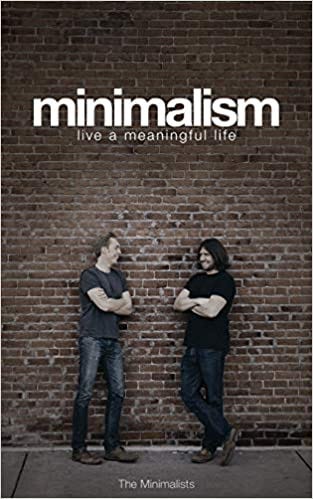
Minimalism: Live a Meaningful Life by Joshua Fields Millburn and Ryan Nicodemus
“Minimalism looks different for everyone because it’s about finding what is essential to you.”
― Joshua Fields Millburn, Minimalism: Live a Meaningful Life
Minimalism: Live a Meaningful Life is a prototypical book about minimalism — and it should be since they practically defined the genre. Based on the wildly successful blog The Minimalists, Millburn and Nicodemus’s book explains the foundations of minimalism as a philosophy, illustrates how minimalism can help you, and how we can find meaning beyond a life of “stuff.”
The friends start the book by establishing that more money will not make you happy. They both have personal stories of having prestigious jobs with six-figure salaries, only for their careers and financial life to become so important they ignore their personal lives. What brought both of them to a life they love was not more money, but slashing their incomes and giving up luxury goods to make time for who and what they love.
After establishing the value of minimalism, they spend the rest of the book teaches the reader how they can bring the joy of minimalism into their own life, whether that’s by decluttering their possessions, their job responsibilities, or their diet.
If you’ve never read about minimalism before and are new to the entire genre, Minimalism: Live a Meaningful Life is an excellent place to start.
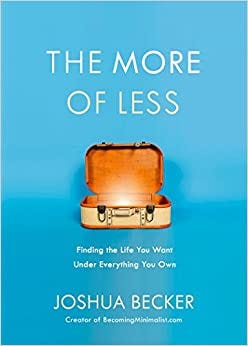
The More of Less by Joshua Becker
“You don’t need more space. You need less stuff.”
― Joshua Becker, The More of Less
The More of Less is an excellent book about minimalism that combines heartfelt first-person stories and third-person stories about other notable minimalists to illustrate the general principles of minimalism.
His stories aren’t just stories by well-off single childless adults, as so many books about minimalism are, but include stories of minimalism in married couples, families, and people who don’t have a $100,000 salary backing them. Several sections of his book are devoted purely to teaching new minimalists how to introduce minimalism to their spouses and children.
In addition to talking about the personal virtues of minimalism, Becker provides scientific evidence explaining that advertising is effective at making us purchase things and discusses the psychological reasons why.
Last but not least: if you’re Christian this will be a great book for you because what Becker adopted minimalism to have more time to do is minister. Inspiring verses from the bible and quotes from Jesus appear in the book.
If you’re not Christian, though, it’s still a great read. I’m no Christian, but I still found the included verses and references to Jesus were inspiring. They were tastefully included and only served to deepen already solid points Becker made.
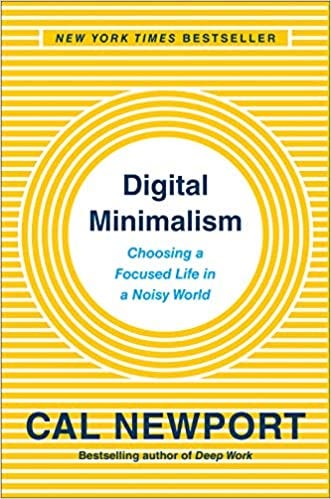
Digital Minimalism by Cal Newport
“Digital Minimalism: A philosophy of technology use in which you focus your online time on a small number of carefully selected and optimized activities that strongly support things you value, and then happily miss out on everything else.”
― Cal Newport, Digital Minimalism: Choosing a Focused Life in a Noisy World
One of the mistakes most minimalist rookies make is assuming minimalism is just a philosophy of physical possession management. In reality, minimalism is a philosophy about removing what doesn’t matter in your life to make room for what does. Skilled minimalists minimize not only their garages but their calendars and email inboxes too.
Digital Minimalism is a book about minimalism in our digital lives. Newport, a professor in the Department of Computer Science at Georgetown, first explains for the reader how software companies have effectively colonized our attention. Then, he lays out a plan for the reader for how they may take back their attention and rule their devices instead of being ruled by them.
You need not be a software engineer to read this book. Newport keeps his language approachable. Instead of talking about sophisticated software engineering techniques, as many digital minimalists do, Newport encourages the reader to think about their life beyond their devices.
No minimalism practice is complete if it focuses only on how packed your closets are. Expand your minimalism to the rest of your life by reading this book.
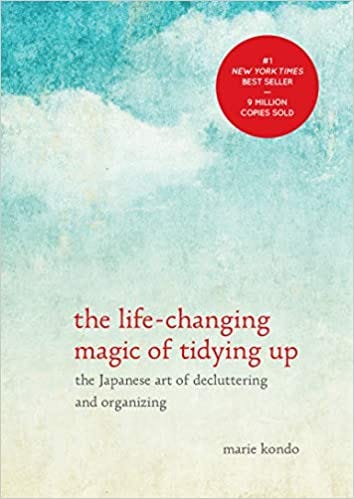
The Life-Changing Magic of Tidying Up by Marie Kondō
“The space in which we live should be for the person we are becoming now, not for the person we were in the past.”
― Marie Kondō, The Life-Changing Magic of Tidying Up
If you can only read one book on this list, I recommend this one.
Nowhere in her book does Kondō use the word “minimalism,” but this cute little book is one of the best guides to minimalism I have ever read. The Life-Changing Magic of Tidying Up is part how-to decluttering guide, part exploration of how minimalism can improve your entire life, and all delightful.
For people who are just getting started with the process of tidying up their home, Kondō offers an easy-to-understand and fun-to-follow process for deciding what to donate and what to lovingly keep. It is from this process that her famous “Does it spark joy?” question originates.
For veteran minimalists, Kondō offers a new perspective on the minimalist life. Instead of overusing words like “minimize,” “declutter,” and “downsize,” she puts the principles of minimalism in language that’s easy to approach. She also discusses how tidying up can improve not only your physical space but the rest of your life, which is where the “life-changing magic” of tidying up comes from.
It’s short, too. The book is short and approachable enough that it’s easy to read in short bursts or listen to as an audiobook. If you drive to work or listen to audiobooks while running, The Life-Changing Magic of Tidying Up will be a quick read.
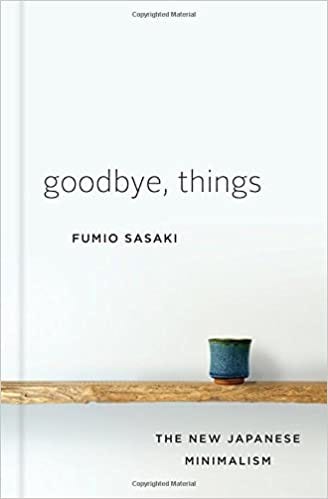
Goodbye, Things: The New Japanese Minimalism by Fumio Sasaki
“The glory of acquisition starts to dim with use, eventually changing to boredom as the item no longer elicits even a bit of excitement. This is the pattern of everything in our lives. No matter how much we wish for something, over time it becomes a normal part of our lives, and then a tired old item that bores us, even though we did actually get our wish. And we end up being unhappy.”
― Fumio Sasaki, Goodbye, Things: The New Japanese Minimalism
I have left my favorite entry on this list for last, and that is the beautiful Goodbye, Things by Fumio Sasaki.
Many people have a meek approach to minimalism. They call themselves minimalists, and they certainly own fewer clothes than most people, but they still maintain a collection of 30 or more books they tell themselves they’re “going to read” and they still feel like they just couldn’t live without their instant pot.
In Goodbye, Things, Sasaki challenges these attitudes. He tells the story of how he went from being like everyone else — owning a house that’s bursting with stuff — to living in a one-room apartment with nearly no possessions. Most people own more spoons than Sasaki does anything. He doesn’t put up with crap.
Sasaki’s lifestyle is not just a demonstration of meaningless asceticism. As he explains the way he lives, he also explains how many of the things we tell ourselves we need are unnecessary. Even “important” things like kitchenware and cookware are often unnecessary and sometimes a time-consuming addition to the cooking process.
What makes this book so magical to me is the writing style. Not only is his lifestyle eye-opening, but he wrote the book in a truly beautiful way (that, or the Japanese-to-English translation added much lyricism). Between that and the gorgeous photographs that are scattered through the book, it’s a book that’s beautiful to read as well as learn from.
Do you really need to read a book about minimalism to become a minimalist? No. You can learn everything about minimalism you need to learn from a few well-crafted blog posts. But reading books like these will teach you more about the psychology behind minimalism, give you new ideas for decluttering your space, and inspire you to live authentically. There are certainly worse ways to spend your time.
Want to Adopt Minimalism in Your Life?
If you want to finally take the plunge and adopt minimalism in your life, my free guide The Complete Guide to Being a Minimalist is what you need.
Get The Complete Guide to Being a Minimalist now!
0: This is an affiliate link
Enjoy this kind of writing?
I send one email a week about AI, intentional living, and doing meaningful work in a world that won't stop changing. Join 700 other subscribers.
Keep Reading
Your Clothes Use More Water Than Your AI
The environmental case against AI doesn't survive contact with the data
Apps Will Soon be Replaced by AI
The first new computing interface in sixty years doesn't need them.
AI Is Building the Biggest Porn Machine in History
The industry that monetizes child rape videos just got mechanized production