Everything You Need to Know About Medical Marijuana
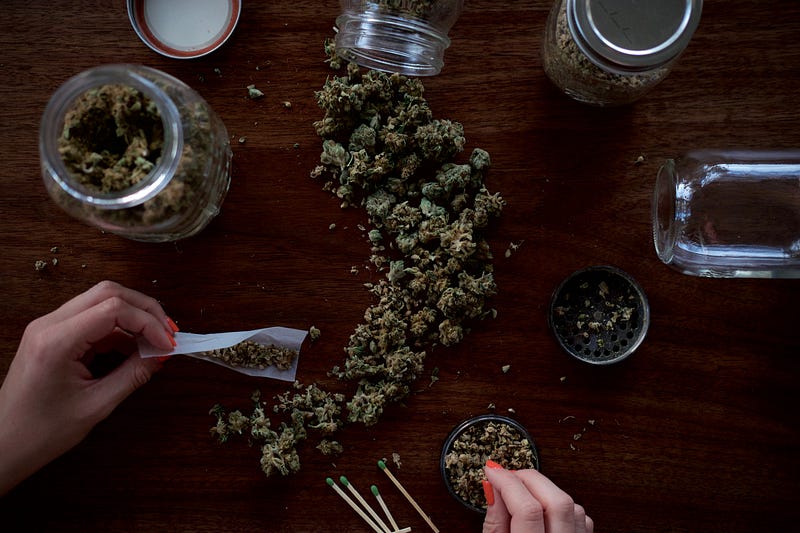
I’ve been a medical cannabis patient for somewhere between three and five years now. In those years, I’ve only met two kinds of people:
- People who don’t really know anything about cannabis, other than that it’s a drug (scary!)
- People who don’t really know anything about cannabis, other than that they love smoking it (“Pass the joint, will you?”). These folks might know the difference between an indica and a sativa, but their knowledge ends there.
Whether you are new to medical cannabis and are considering getting a card to treat a medical condition or you’re a regular stoner who just doesn’t know much about cannabis or the industry that produces it, this is the guide for you.
The Difference Between Medical Cannabis, Recreational Cannabis, and Black Market Cannabis
“Marijuana” is not one monolithic product. There are all different kinds of marijuana plants, different preparations of marijuana, and different ways of ingesting it. It’s a little like alcohol — you can buy beer, wine, vodka, tequila, or liquor-infused candies.
The big difference, though, is that there’s a lot more variety with cannabis.
Any alcoholic product has one active ingredient: Ethanol alcohol. You can dress it up with different flavors, additives, and ferment it from different products, but ethanol alcohol is ethanol alcohol.
Cannabis, on the other hand, has many active ingredients. There’s THC, of course, the active ingredient everyone associates with “getting high,” but there’s also CBD, a compound that is associated with a smooth, relaxed feeling that, surprise surprise, can also get some people high. These are only two of 144 cannabinoids found in the cannabis plant.
Plenty of people buy products that have only THC or only CBD, but it’s best not to think of cannabinoids in isolation. Much like vitamins in your body interact to keep you healthy, the different cannabinoids available in the cannabis plant interact to produce all kinds of healthful medical and psychotropic effects. People often buy THC-only products to get high, but these THC-only products are not going to produce nearly as many anti-inflammatory or other healthful effects.¹
Cannabis variety is why some people will report that “cannabis cured their anxiety” and other people will report that cannabis causes anxiety attacks. That’s why some epileptics find cannabis cures their seizures while people with inflammatory bowel disease find cannabis restores their gut health for the first time in decades. It’s not that cannabis is a wonder-drug that does it all; it’s that these people are consuming different chemicals.
Black-market cannabis tends to be cannabis bred to be heavy on the THC and light on all the other cannabinoids. People who buy marijuana from a dealer buy because they want to “have a good time,” and the marijuana dealers sell reflects that.
Buying from a dealer is not like buying from a store. You don’t get to pick the strain you want or ask about various qualities. The dealer often has one type of marijuana available (the THC-heavy veriety) and you can either buy that or go home.
There was a time when dealers would sell plants they bred themselves or that others bred, but these days, most dealers sell product they bought from a weed-legal state and illegally moved across state borders. That makes it a lot safer than black-market marijuana of the past, but it has next to no medical value — and, of course, it’s still illegal.²
Recreational cannabis is a lot like buying cannabis in a liquor store. Liquor stores often have cops protecting the premises, and you have to present a card or other proof of legitimacy when you walk into the store. Once you’re in the store, you can shop around, look at product, and take something you like home with you.
Recreational cannabis stores are, unsurprisingly, usually heavy on THC products as well. There will be a lot of concentrates (juice for vapes), edibles, and flower (that’s the green cannabis plant itself, dried and ready to smoke) that are all either bred for THC or chemically manufactured to contain only THC.
But because they’re stores, they often have some variety.
They may have edibles and concentrate that is “full-spectrum,” mentioned earlier, which is a type of product where the edible or concentrate retains the hundreds of cannabinoids that were available in the plant it came from, not just THC or CBD. They are called full-spectrum because they contain the full spectrum of cannabinoids from the original plant. (If you haven’t guessed by now, I always buy full-spectrum products).
They may have what are called “1:1” products, referring to flower, edibles, or concentrate where the proportion of THC is equal to the proportion of CBD. Science has indicated that there are some healthful properties of cannabis consumption that only occur when THC and CBD are present together to interact and become more than the sum of their parts. (I always buy 1:1 products when possible).
Medical cannabis is basically just recreational cannabis with a state-issued card. To get a medical marijuana card in my state, I need to show proof of my medical condition (a stack of medical records) to a certified marijuana doctor, who writes me for a card.
Honestly, this whole process seems totally illegitimate to me. The “certified marijuana doctor” is not my doctor. They’re just a random doctor assigned to me by the marijuana certification agency, and it’s different every year. Getting a medical card is much more a matter of preparing a convincing bureaucratic case than it is having a legitimate and pressing medical condition.
And, of course, once you have the card, your “treatment” is basically up to you. As a “patient,” I decide what kind of cannabis I buy, when, and how much. The people who work at the dispensaries are not medical professionals, either; they’re just regular enthusiasts like me.
I don’t think this is unsafe. Cannabis is a very safe product, especially when packaged and sold in a legal market. It does annoy me, however, that conservative states will spend years getting their knickers in a twist about “drug addicts” and “what will it do to the children”, only to design a system with nearly no medical oversight that is also an expensive bureaucratic nightmare.
Oh, did I forget to mention that? Getting your medical card in more conservative states is expensive. Every year when I recertify my medical card, I have to pay both the state and the agency certifying me hundreds of dollars. Cannabis in more conservative states tends to be more expensive, too.
I’m clearly not paying the state for attentive medical care, so what exactly am I paying them for?
“Medical Cannabis” is a Joke
Cannabis absolutely has healthful medicinal properties. For years, I’ve regularly smoked or consumed cannabis edibles to manage pretty crippling irritable bowel syndrome. Cannabis consumption has stabilized my gut health enough for me to travel, buy new foods, and live a much better life.
But that’s not because medical science uncovered something special about cannabis. It’s not because some state agencies certified me specially for use of this “very dangerous” chemical. The cannabis I’m smoking is not much different from the cannabis that’s been bred for thousands of years.³
As far as I can tell, there are two reasons my state allows medical cannabis but not recreational cannabis:
- A bunch of — forgive me — panty-waisted baby boomers are terrified the devil’s lettuce will corrupt their children or some such nonsense.
- What’s regulated can be taxed, and the more heavily regulated it is, the more heavily taxed it can be. My state is known for promoting cannabis legislation which is very heavily regulated and taxed.
If you are desperately looking for relief from a medical condition but are leery of “doing drugs,” you needn’t be. When you purchase the right product, cannabis is a very mild and healthful product that can really improve your functioning from a variety of different health conditions.
But, you should know that there’s nothing special about medical vs. recreational cannabis. The same cannabis is for sale at recreational and medical dispensaries all over the country. The only reason “medical marijuana” legislation exists is because it makes legislators comfortable, not because it makes you any safer.
When I first became interested in marijuana, I myself was leery. I was a straight-edge college student raised by straight-edge parents. My parents had never smoked weed, and I had never even seen weed. And like a good straight-edge kid, I believed that partaking of the devil’s lettuce was a one-way ticket to mediocrity.
But my stomach started hurting. More and more and more. I cut out gluten, and then high fructose corn syrup, then synthetic dyes, then fatty food, until I was subsisting on nothing except a few favorite foods. I couldn’t go out to eat with friends and I couldn’t travel. I couldn’t even leave the house for more than six hours because I didn’t know where I’d be able to find food I could eat. And after years of this, I was willing to risk the devil’s lettuce to find some relief.
Well, the joke was on me. The devil’s lettuce is basically not a threat, and all it did to me was settle my stomach enough for me to start eating real food again. Thank god for marijuana.
Want to Read More?
If you want more thought-provoking articles like this one, my weekly newsletter Seeking Truth was made for you.
Click to sign up for Seeking Truth here!
1: They are, anecdotally speaking, also more likely to trigger anxiety or other negative side effects associated with marijuana.
2: As much as I like marijuana, I hate the illegal marijuana market. People who sell marijuana illegally sometimes sell other substances like cocaine, and if they sell in large enough quantities, they may have to buy firearms or other weapons illegally to, uh, collect from people who have failed to pay their “bills.” Marijuana is great, but the drug trade is not.
3: Modern strains of cannabis that are bred for more than 10% THC are different from ancient cannabis. Decades ago, most cannabis was less than 10% THC, and now it’s routinely 25% and up. I intentionally stay away from those strains.
Enjoy this kind of writing?
I send one email a week about AI, intentional living, and doing meaningful work in a world that won't stop changing. Join 700 other subscribers.
Keep Reading
Your Clothes Use More Water Than Your AI
The environmental case against AI doesn't survive contact with the data
Apps Will Soon be Replaced by AI
The first new computing interface in sixty years doesn't need them.
AI Is Building the Biggest Porn Machine in History
The industry that monetizes child rape videos just got mechanized production