How To Design Your Life For Flow
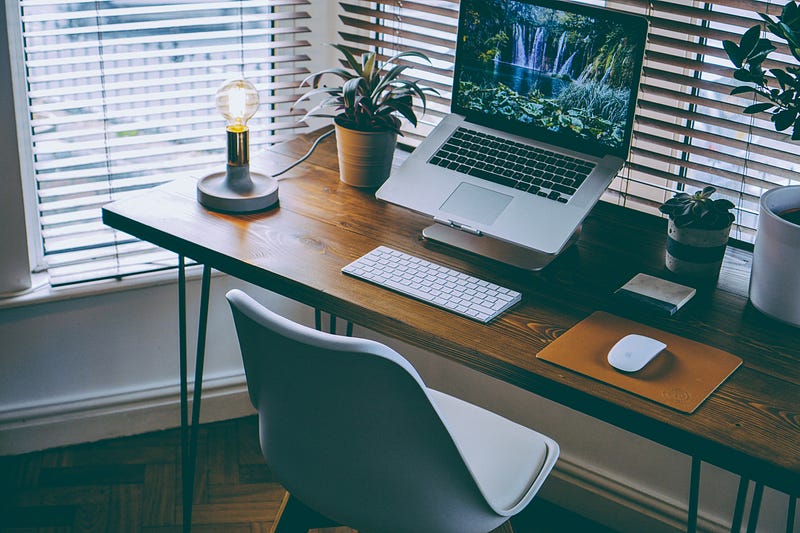
“Humans are built for flow. We just have to design our environment accordingly.”
— Niklas Göke
In a video game, the player is presented with a series of environments. In each environment, the player is presented with a set of options; the player could talk to an NPC, the player could open doors, gates, or locks, and go to other areas, or the player could investigate objects in their environment and decide to pick them up or use them.

In real life, our options aren’t constrained by what video game designers have decided for us. But, like little video game designers, our brains constrain our options for us. When we walk into an environment, our brains generate a list of choices that are available to us. These choices are largely based on our immediate environment; when we walk into a living room with a TV and a PS4, our brains generate a list of options that looks like this:
- Option A: Collapse on the couch and watch some Netflix
- Option B: Play some Far Cry
- Option C: Play some FIFA
When we walk into a dirty kitchen with a sink full of unwashed dishes and a pantry full of unhealthy food, the options your mind generates look like:
- Option A: Get some pizza from the fridge
- Option B: Do the dishes
- Option C: Make some ramen
Choosing an option that is not on the brain’s pre-generated list of options is challenging. For instance, if you want to meal prep but your kitchen is full of dirty dishes and unhealthy food, meal prepping involves cleaning your entire kitchen and going to the store, and that’s before even starting to make the food.
The list of options the brain generates is not rational; it’s not based on what’s possible, on what our goals are, or even what we want. The list of options it generates is based on what’s immediately available and what’s immediately pleasurable, and almost nothing else.
Our brains do this because they didn’t evolve for rationality and long-term thinking; they evolved to help us survive on a moment-to-moment basis in a harsh, competitive natural environment. And as Richard Dawkins explains in The Selfish Gene, the evolutionary process does not care about rationality or accuracy — just effectiveness.
The wonderful news is that we can do something in real life we can’t do in a video game: modify our environment.
In a video game, you’re stuck with what the video game designers have given you. But in real life, you’re able to make changes to your environment that change the list of options your brain generates.
For instance, consider the kitchen example given above. Our protagonist’s kitchen has a sink full of dirty dishes and a pantry with unhealthy food options, so her brain generates options like “make ramen” and “clean the kitchen.” But what if the kitchen had clean dishes put away and healthy food in the pantry and fridge? Her options would look more like…
- Option A: Cook a quinoa bowl
- Option B: Have some soup
- Option C: Meal prep for the next few days
Now those are some options I can get behind.
What does this have to do with flow?
The ability to enter a flow state is predicated on two things:
- The ability to enter a flow state
- The ability to remain in a flow state
Both of those things are dependent on your environment; the harder your environment makes it for you to enter a flow state, the less likely you are to do so. And the harder your environment makes it for you to remain in one, the shorter your periods of flow state will be.
In order to maximize our periods of flow, we need to design environments that:
- Give us the best choices for what to do
- Allow us to focus on what we’re doing once we’ve chosen
How To Design Your Environment For Flow
Decide On Your Goals
The first step to designing your environment is deciding what you want out of your environment. Marie Kondo calls this “setting an intention.” Other people like to attach numbers to it and call it “goal setting.”
I like to start by doing this at a macro level; deciding what my intentions are for not just one environment, but for my entire life. For example, the intentions I’ve set right now for my life are, loosely:
- To write, submit, and publish more articles
- To read books and Medium articles
- To exercise and stretch regularly
- To meditate daily
- To avoid getting high or drinking alcohol
This list determines the priorities for the environments in my life.
Design Your Physical Environment
Next, you want to design your physical environment around the intentions you just set. You want to design an environment that makes it easy for you to act on your intentions, and difficult for you to do otherwise.
For instance, one of my intentions in April 2019 was to give up watching TV. At the time, I lived in my parent's house, and the room I lived in was arranged so that there was one empty white wall for my projector TV to project on. It was very tempting for me to come home from work and collapse on my bed, zonked out in front of a wall-sized television.
In order to make my dream of giving up TV come true, I had to do something that was very painful: sell the projector TV.
The projector TV was awesome. It was only $600, and it made your $3000 ULED flatscreen look like a stupid toy. I did not want to sell it. But someone who doesn’t watch TV doesn’t need a TV, no matter how awesome it is. I was trying to become someone who doesn’t watch TV, so it had to go.
And just like that, I achieved my goal. In May of 2019, I watched less than five hours of TV.
Most environment interventions are not that obvious or easy to make, but they’re there. For example…
- If one of your intentions is to have better sex with your partner more frequently, there’s lots of evidence to suggest getting rid of the TV in your bedroom is the way to do so.
- If one of your intentions is to eat more home-cooked meals, refuse to buy snacks and instant-ready meals so you are situationally forced to cook.
- If one of your intentions is to meditate daily, buy a meditation cushion and set it out in a specific spot to remind you to meditate whenever you see it.
Ask yourself: does my home make it easy to do what I want to be doing?
Chances are, it does not. Most American homes are arranged so the living room has a couch and multiple chairs which face a TV; the desks and bookshelves are frequently an afterthought, stuffed into an alcove or the corner of a bedroom. The home gym equipment is stuffed into a drawer in the coffee table, whereas the alcohol is placed on a shelf where it’s easy to reach.
Rearranging my environments so they encourage what I want to be doing has made it much easier to do what I want. Achieving my goals no longer feels like a herculean effort; whenever there’s a goal I want to achieve, all I have to do is ask myself whether my environment supports it.
Design Your Digital Environment
In the internet age, the physical space is not the only space in which you exist. You also have a digital environment, an environment that is just as important to your success as your physical one. Your digital environment is made up of:
- Your smartphone
- Your laptop(s)/computer(s)
- Your tablet(s)
- Your smart TV/Apple TV/etc.
- Your game console(s) (Xbox, Nintendo Switch)
- Anything digital you interact with on a regular basis
Refer back to the intentions you set for your life; as with your physical environment, your digital environment can either support or hinder your ability to live up to these intentions. In addition, sometimes people have intentions purely for their digital space, such as:
- Spend less time on their devices (and more time attending to what’s in front of us)
- Spend less time on social media in particular
- Spend less time checking emails (or getting fewer emails in the first place)
Your digital environment can be designed to support these intentions just like your physical environment can.
The most important digital environment you have is, undoubtedly, that of your smartphone. Each person’s phone is a unique environment — but most people don’t take any time to thoughtfully design this environment. They download apps and let them pile up on their phone without giving any thought to how they want to use their phone in their lives. As a result, the options they see when they look at their smartphone home screen are typically things like:
- Option A: Open Facebook
- Option B: Open Snapchat
- Option C: Open Twitter
So on and so forth.
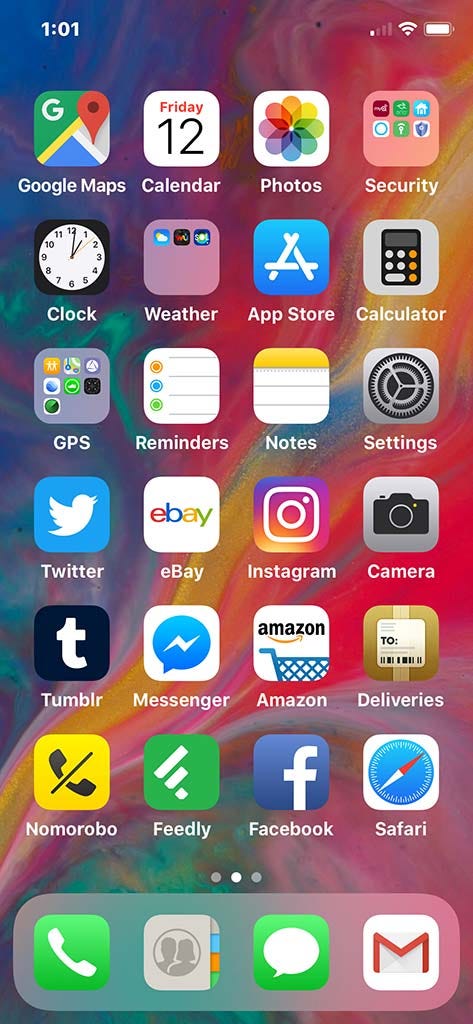
Home screens that look like this aren’t designed for flow because there are a million options, most of which probably do not support your goals. Every app that doesn’t support your intentions is an opportunity for you to be kicked out of flow and into distraction.
My phone, which I have done my very best to design for flow, looks like this:
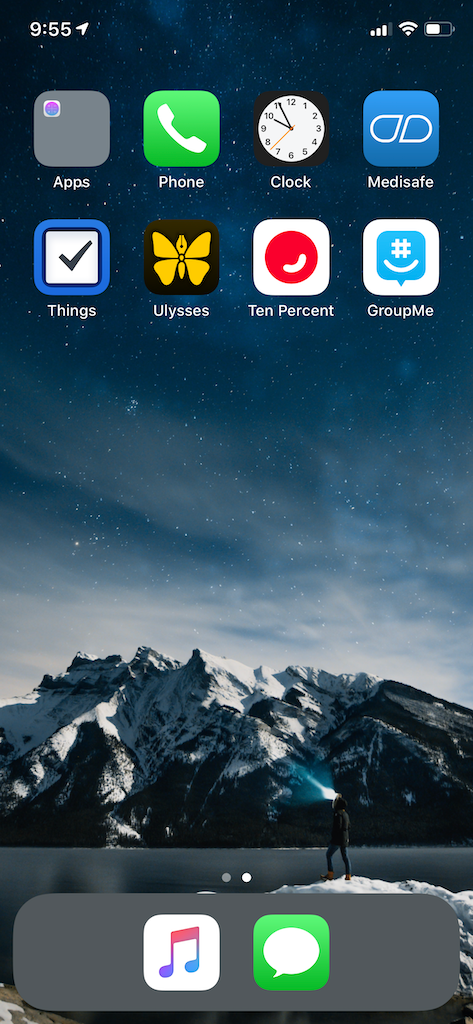
And by the numbers, I’d say it’s working. One of my intentions is to spend as little time on my phone as possible, and Screen Time says I spent between 45 minutes and 1.5 hours on my phone a day — well below the national average of six hours.
If you want more information on how to design your smartphone for flow, I’ve written an article about my minimalist smartphone and why I designed it the way I did.
What My Minimalist Phone Looks LikeHow I keep myself from drowning in notificationsmedium.com
I think what stops most people from achieving what they want to achieve is not a lack of ability, or pure laziness, but simply things that make them stumble; the fact that they’d have to clean their kitchen and go grocery shopping in order to meal prep, or that they’d have to rearrange all their furniture just to do some at-home exercises.
Environmental design is so powerful precisely because it removes these roadblocks. It’s a lot easier to walk down a paved road on a sunlit day than it is a rocky path in the middle of a rainstorm, and it’s a lot easier to be productive and make healthy choices when you don’t have to fight a torrent of clutter and undone tasks.
My challenge to you is to take an honest look at your own life and ask yourself how your environment affects your ability to enter flow. Are your home, office, and digital environments designed to maximize your ability to do what you want? Or are they filled with clutter and distractions? You can achieve your goals either way, but one way makes it that much harder.
Want to start being seriously productive? Sign up for my free Get Productive email course.
Or, if you just want more stories like this, sign up for my weekly digest.
Enjoy this kind of writing?
I send one email a week about AI, intentional living, and doing meaningful work in a world that won't stop changing. Join 700 other subscribers.
Keep Reading
Your Clothes Use More Water Than Your AI
The environmental case against AI doesn't survive contact with the data
Apps Will Soon be Replaced by AI
The first new computing interface in sixty years doesn't need them.
AI Is Building the Biggest Porn Machine in History
The industry that monetizes child rape videos just got mechanized production