I’m Tired of Articles Satirizing #Vanlife
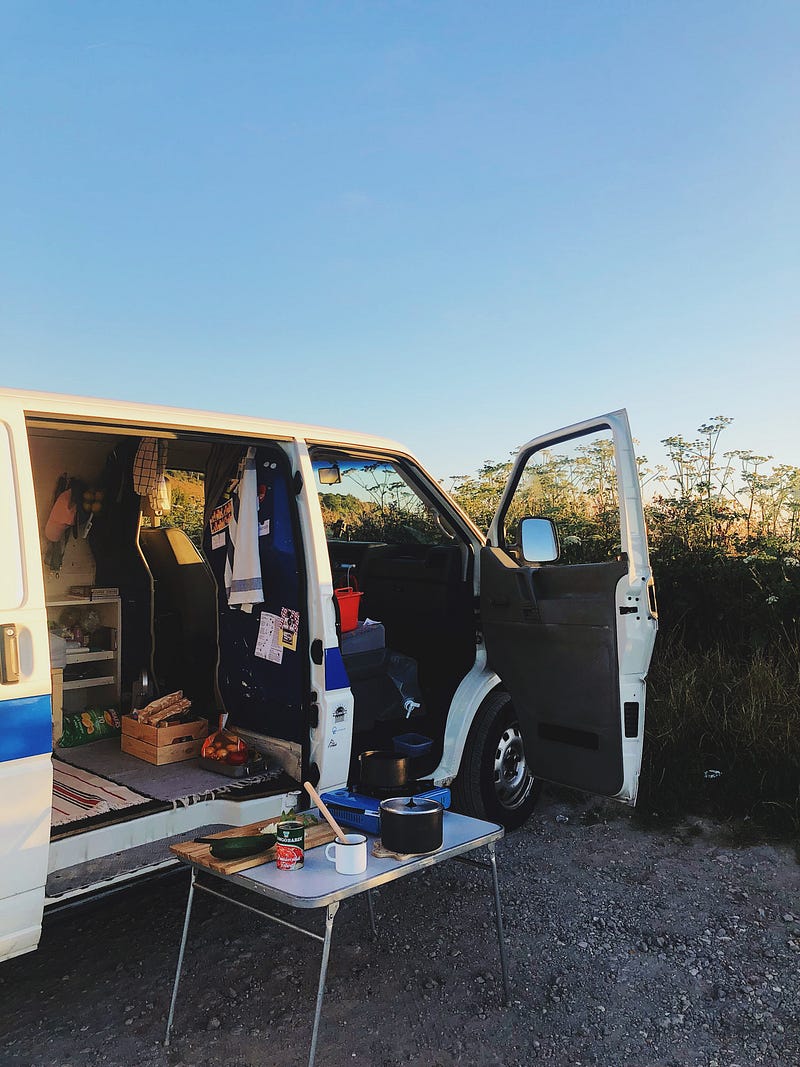
It seems like six months can’t go by without a major magazine company running a thinkpiece that either satirizes or openly criticizes people who enjoy #vanlife. Here’s one from January 2021, right in the middle of the pandemic.
The one thing that’s consistent about all these pieces is the author of the piece (who is not a #vanlifer themselves) invariably misunderstands what #vanlife is about.
Journalists Have the Wrong Mindset — They Erroneously Expect a House on Wheels
Invariably, they conduct their “test” of #vanlife in extraordinarily luxurious camper vans rented on their behalf by their magazine. We’re talking 2021 extra-long wheelbase Mercedes Sprinters with 500 watts of solar panels, full showers with hot water, and fridge-freezer combos. Their attitude as they enter their experiment seems to be “This is going to be exactly like a house, but on wheels!”
Well, no surprise, it’s not. Even the most luxurious camper van isn’t a house on wheels. When you have to tote around your water in a tank and your electricity in a battery, there will always be a limit to your hot water supply. You can’t play Xbox well into the night.
People who voluntarily choose #vanlife understand these tradeoffs and are happy to take them. Some people shell out lots of cash for nicer camper vans with luxuries like hot water and extra battery power, but they still fundamentally understand these are luxuries.
Journalists experimenting on behalf of their magazine, however, do not understand this. They are treating it like it’s supposed to be a house on wheels and then acting surprised when it’s not.
#Vanlife is Different For Everyone
Living in a camper van isn’t like living in a house on wheels — what it actually is all about is different for everyone.
There are definitely rich millennials who sink $40,000 into buying a high-top Mercedes Sprinter and outfitting it with cedar wood planks, a shower with a composting bathroom, and the most expensive rust protection money can buy. We’ve all seen Instagram photos of these. But most #vanlifers aren’t that.
There are people who live in budget camper vans made from old 90’s conversion vans. All the owners did was screw some old furniture into a van chassis and call it a camper van. The entire project often costs them less than $5000. (Here’s a link to my favorite example). Some people do it this way out of financial desperation (like the people in Nomadland), and some people do it out of an intense desire to save money.
I think most #vanlifers are people like me — they buy a van that’s anywhere from five to fifteen years old and spend $5000 - $30,000 converting the thing. (My van is 12 years old and my total spend will come in under $15,000). It’s a good middle ground — you have an RV that is reliable and modern, but you didn’t break the bank acquiring it.
I didn’t initially want to spend $15,000 on a van. I wanted to be one of those people with an affordable adventure — but my $2,000 van ended up costing me something like $8,000 over two years, so I let that money pit go. Some people are able to get lucky and find a $1,500 van that will run another eight years, but I wasn’t one of them.
What people do with their vans also differs. Some people live in them full time. Some people live in them part time. Some people live in them full-time in one location, like a city, while they spend most of their time at work or school. This is a popular choice for people who live in expensive locations like San Francisco or attend intense, expensive schools like Harvard. Some people only live full-time in their camper vans while traveling.
How you use your van matters because it vastly changes the amenities you need. People who work at offices with showers or at schools with gym and shower facilities don’t need to worry about keeping large quantities of water, a showering mechanism, or emergency bathroom facilities on board. People who will live in their van in temperate climates don’t need to worry about heating and cooling systems. You see where I’m going with this.
For all these reasons, I think it’s difficult for a journalist to get a good “#vanlife experience.” If a journalist wants a thorough story about vanlife, they’re better off going to a #vanlife meetup and interviewing some bona-fide camper van people.
But, I don’t think these people want thorough stories. I don’t think they’re looking for a sophisticated and detailed window into the lives of people who live alternative lifestyles. I think they’re just in it for the clicks.
#Vanlife is trendy. People see #vanlife photos on Instagram and feel envy. It’s really not surprising that editors who are looking for easy clicks would tell their staffers to “spend a week living the #vanlife and do a write-up about it.” And, being woefully unprepared, it’s not surprising said staffers would write an overwhelmingly negative write-up.
Living in a camper van doesn’t suck if you’re the kind of person who’s interested in doing it. If you are seriously toying with the idea of buying a van, don’t let these “thinkpieces” scare you off. Rent a camper van for a weekend and try it out for yourself.
Want to Read More?
If you want more thought-provoking articles like this one, my newsletter Seeking Truth was made for you.
Enjoy this kind of writing?
I send one email a week about AI, intentional living, and doing meaningful work in a world that won't stop changing. Join 700 other subscribers.
Keep Reading
Your Clothes Use More Water Than Your AI
The environmental case against AI doesn't survive contact with the data
Apps Will Soon be Replaced by AI
The first new computing interface in sixty years doesn't need them.
AI Is Building the Biggest Porn Machine in History
The industry that monetizes child rape videos just got mechanized production