If You Can’t Meditate for Ten Minutes, That’s Okay
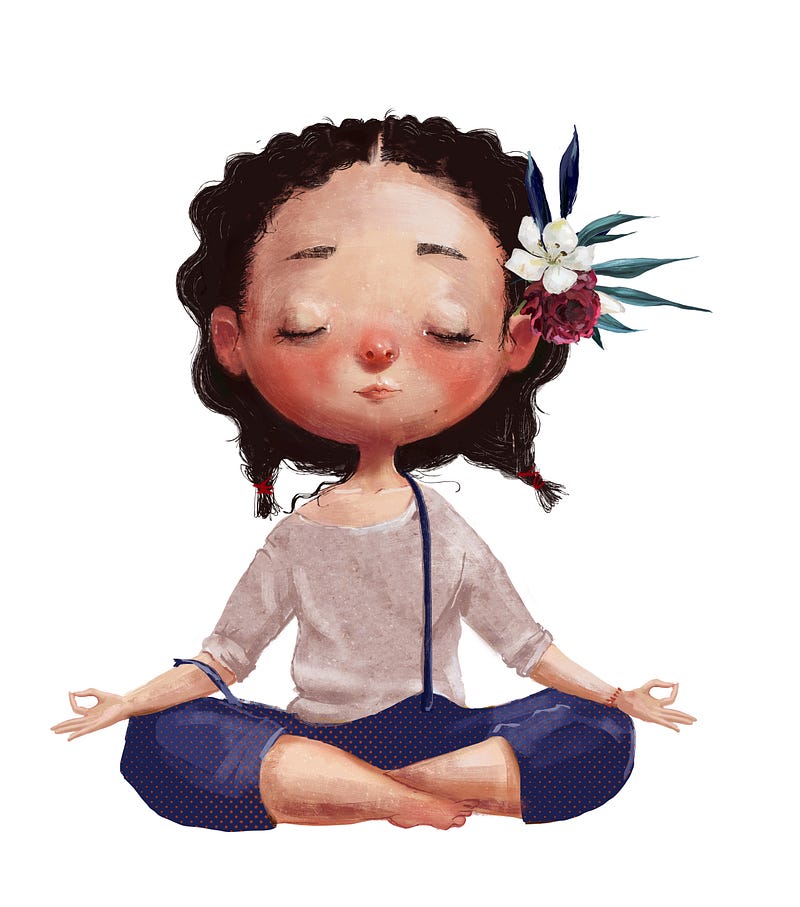
Most meditation tools out there create the expectation that you need to meditate for at least ten minutes a day.
- Meditation apps make ten minutes the minimum duration for a meditation session
- Meditation books recommend readers begin with a daily practice of ten minutes a day
- Guided meditations on YouTube are ten minutes in length
I’m sure many people are able to start their meditation practice by meditating for ten minutes a day, but for many others, starting a brand-new meditation practice with a ten-minute daily commitment is too big an ask.
It certainly was for me. The first time I tried to build my meditation practice, about four years ago, I wasn’t able to. Every time I tried, I ended up bolting off around the one or two-minute mark. The enforced ten-minute minimum led me to consider these attempts at meditation as failures.
After many failed attempts, I began to think I just wasn’t able to meditate. I began to see myself as broken, unable to meet even the bare minimum standards for the mere act of sitting on a floor without moving. I saw it as proof that I was exactly as dysfunctional as I worried I was.
It wasn’t until I read Lodro Rinzler’s Sit Like A Buddha that I learned that no, this experience is very, very normal.
To the beginning meditator, Rinzler offers this advice:
- Pick a fixed amount of time to meditate. You can pick thirty minutes, or ten minutes, or five, or three, or even one. It doesn’t matter how long you pick, as long as you will be able to sit and meditate through the entire duration of the time.
- Pick a dedicated place in your home to be your meditation spot, the place in which you will always meditate.
- Make a point of sitting there, in the same place, at the same time every day, and meditating for the amount of time you’ve chosen. He says you should not get up until the end of your session — and, he says you should not meditate for any longer than your session, either. You are trying to build a meditation practice, not win a prize. (Rinzler says you can lengthen the amount of time you meditate by a little bit every two weeks, but no more than that, or you risk the integrity of your practice).
For those who are familiar with the process of habit building, you will recognize Rinzler is doing nothing more than walking his reader through the basic building blocks of habit formation. Decide on a discrete habit to form, pick a place to form the habit, pick a time to form the habit, and form it.
I followed Rinzler’s advice, and it worked like a charm. I bought a meditation cushion, and every morning at 6 AM, I woke my sorry ass up and sat on that cushion for two minutes before writing my article for the day.
At first, those two minutes were extremely uncomfortable. I squirmed like a toddler being told to sit still. It embarrassed me, really, how difficult I found this. But I persevered, and after two weeks, I finally began to feel at ease, so I bumped my time up to four minutes. Then five. Then seven. I got stuck at seven for a month or two, but eventually, I was able to move up to eight minutes. Months later, I’m finally able to sit for ten minutes at a time, the introductory amount of time for most meditation programs.
I’m not the only one who had to go through this painstaking acclimation process. As Jon Brosio writes in The Post Grad Survival Guide…
I generally commit to a 10 minute mindfulness meditation
This helps with getting my mind centered and reducing the anxiety and overwhelming thoughts of what was in front of me for the day.
It didn’t start directly at 10 minutes.
Actually — I started at just 60 seconds. I set a timer and just made sure I didn’t open my eyes for 60 seconds. After a couple of weeks with that, I moved to 2 minutes.
Then 4 minutes.
Then 8 minutes.
And then 10.
Sometimes I do fifteen when I really feel I need it…
My $2,500 a Month Side Hustle Routine That Most People Won’t Adopt by Jon Brosio.
People in my real life, both friends and acquaintances, have shared similar concerns with me. “I’m just not able to meditate,” they tell me. “I can’t get into it.”
But thanks to Rinzler, Brosio, and my own experience, I know better. Anyone can meditate, as long as stop judging ourselves for not being able to meet someone else’s expectations and start meeting ourselves where we are.
So, if you find yourself unable to or uncomfortable with meditating for ten minutes at a time, don’t force yourself to meditate for that long. Pick an amount of time to meditate that feels manageable for you, even if that amount of time is a mere thirty seconds, and make a habit of doing it every day. Practice makes perfect, and that’s true even for meditation.
When I was first meditating, one of the biggest challenges for me was just finding a damn meditation app that would allow me to set the timer to something shorter than ten minutes.
I could have used my iPhone’s timer function, of course, but I wanted a meditation app that gave me the option for soothing sounds like singing bowls, ambient music, or interval bells settings as well.
Interval bells were especially helpful for me; when my meditation sessions were five minutes at a time, I would have my app to play a bell every two and a half minutes to help me manage my anxiety.
After spending the last year and a half trying every meditation timer on the App Store, here are my picks for the best meditation timers for people who need more flexibility with the timer settings:
QuietMind (iOS, Android)
QuietMind is the first meditation timer I found that I actually liked. It’s dead simple to use, too. Just set the duration for your session, configure any interval bells you want, and off you go.
The reason I eventually switched away from this timer was that you could not look down at it and see how much time you had left. I’m getting over this, but for a long time, not knowing how much time was left in my session made me feel so anxious I would get up off the cushion and quit meditating entirely. Having the timer available to look at made it easier for me to keep going.
Timefully (iOS)
Timefully did everything QuietMind did, and had a timer display feature. It also had more options for timer sounds, which I liked, and includes this neat feature that allows the user to record their session experience. It also has pretty animations for trees, which never hurt.
The reason I eventually switched away from Timefully was that, although it had more features than QuietMind, it lacked the ability to play ambient music. I was using Timefully for my timer and Brain.fm’s unguided meditation soundtrack to meditate, but having to juggle the apps was an annoying experience.
Insight Timer (iOS, Android)
Insight Timer is hands down the best meditation timer I’ve ever used. I can set the length to any amount I want, set as many interval bells as I want, use any kind of bell tone I want, and play ambient sounds to help me focus. Best of all, these features are all entirely free.
Well, this has been a very long article just to say what everyone should already know: If you can’t meditate for ten minutes at a time, that’s okay. You can build your meditation practice by meditating for as little as one minute a day. This does not make you a meditation failure. Plenty of people, myself included, had to start small with our meditation practices.
It doesn’t matter how long you meditate. What matters is that you make a habit of doing so, as often as you possibly can. If you show up to the cushion every day, success will inevitably follow.
“The mind can go in a thousand directions, but on this beautiful path, I walk in peace. With each step, the wind blows. With each step, a flower blooms.”
― Thich Nhat Hanh
Enjoy this kind of writing?
I send one email a week about AI, intentional living, and doing meaningful work in a world that won't stop changing. Join 700 other subscribers.
Keep Reading
Your Clothes Use More Water Than Your AI
The environmental case against AI doesn't survive contact with the data
Apps Will Soon be Replaced by AI
The first new computing interface in sixty years doesn't need them.
AI Is Building the Biggest Porn Machine in History
The industry that monetizes child rape videos just got mechanized production