If You Need Help, Just Ask For It
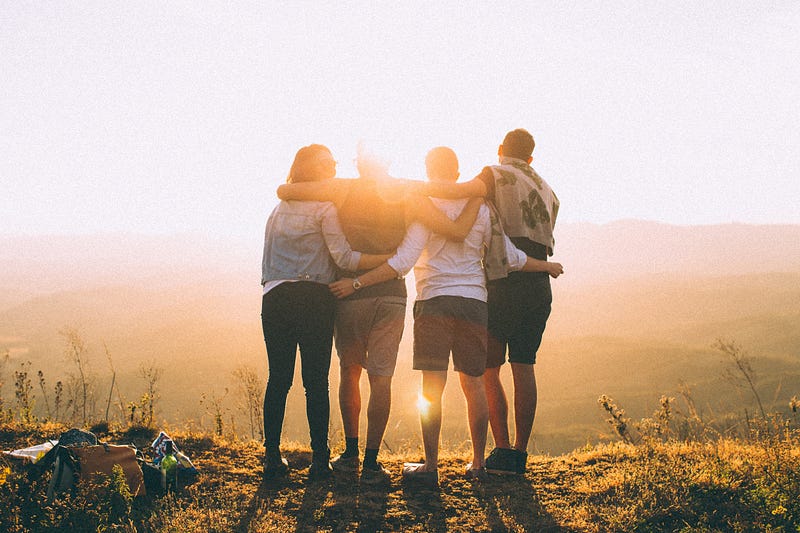
Many years ago, I went on a backpacking trip organized by my university. Two expert guides and fifteen or so novices, all of us students, piled into a university bus and drove to Monongahela National Forest, upon which point we disembarked and hiked 13 miles over the course of 3 days. We stumbled through the forest, forlornly holding our phones above our heads in search of cell service that wasn’t there, complaining about the pain in our feet, stopping every few miles for what we called “selfie breaks.”
Looking back on this experience, I’m filled with fondness. But at the time, it felt like a forced march. Aside from the expert guides, all of us were in pretty poor shape, unused to hiking five miles a day with several dozen pounds on our backs. By the end of the first day, we were all privately wondering what inspired us to go on this hiking hell. By the second day, we all started to develop blisters, sores, and other foot injuries. We had to stop frequently to bandage our feet and rest.
On the third day, one member of the group started to routinely fall behind. She was a tiny woman, an engineer who was 4 foot 11 and couldn’t have weighed more than 100 pounds. We assumed she just wasn’t strong enough for the journey — but then she started to cry.
The group stopped dead and the guides rushed over to her. When she took her shoes off, one of her socks was filled with blood. She’d hurt her feet miles ago and didn’t ask for help, bandages, or even a break.
Everyone started to laud her. As the guides bandaged her foot, everyone spoke glowingly about how tough she must be to have walked miles on her foot like that without complaining or asking for rest.
I understood what I was supposed to feel at that moment was sympathy, but I didn’t. I felt annoyed.
I wasn’t annoyed that we were waylaid (after all, I was as thankful for the break as anyone). I was annoyed for her sake. If she’d had the sense to stop the group and ask for help when she injured her foot, she could have saved herself all that pain. I was also moderately annoyed for the men who had to carry her pack; if she had gotten help when she needed, the others wouldn’t have had to shoulder her burden for her.
This isn’t just theoretical. I’m not much taller than her, and at the time was also in pretty poor health. But when I felt my feet were becoming injured, I didn’t march until I cried. I stopped the group and bandaged my feet. If I needed to rest, I asked the group to stop and rest.
When I had to do this, I got the impression this annoyed everyone else. But this woman, who did not take care of herself the way she should have, who ended up injured and whose injury forced others of the group to carry her pack, was praised profusely for the rest of the trip.*
My experience on this backpacking trip is pretty typical of American culture. We don’t reward people who ask for the help they need. We reward people who try to make it on their own, regardless of how excruciating it may be for them (and how damaging it may be for everyone else). In America, suffering in the extreme and coming out on top is admirable.
Here’s an example: In America, when someone has financial trouble, the expectation is that we will only ask for financial help if we are on the brink of starvation. And even then, we can only ask our family or very best friends for financial help. And even then, we can only ask if we have done our very best to jump through the innumerable hoops required to get government assistance of any kind. I have known people who would rather go hungry than just get food stamps or ask someone for some money. I have known people who would rather go hungry than take my money when I’m offering, too.
Another example: In America, when someone’s struggling emotionally or mentally, the expectation is that we will keep it to ourselves. If someone close to us notices and comes to our aid, that’s great, but it would be a faux pas for us to contact someone else and tell them we need help. Pretty much the only circumstance in which we’re allowed to proactively ask for help is if we’re suicidally depressed, and even then we run the risk of being called dramatic, a liar, or a faker. Everyone would really just prefer we “work through it on our own.”
We even impose this burden on our own. My friend who went hungry instead of signing up for food stamps did so because she did not want to “forfeit her pride.” Many men in America refuse to ask for emotional help when they need it (or financial help, for that matter) because they do not want to “appear weak.” As a nation, we’d rather be alone and hungry than risk others shaming us for things that are out of our control.
If we really want to reduce the amount of suffering in this world, that’s got to change. We’ve got to do what it takes to make people feel comfortable asking for help.
- When someone we love asks us for money, we should be generous with ours without thinking they’re a grifter for it.
- When someone we love asks us for emotional support, we should be supportive and empathetic instead of attempting to fix their problems or judge them for not doing so.
- When our spouse, family, or friends need to take some time off to recuperate, we should allow them to do so without making them feel bad for it.
In short, we’ve got to challenge the notion that the epitome of strength is suffering without asking for help because that has produced a nation of people who are suffering and not asking for help.
So I propose a new definition of strength:
Strength is helping other people shoulder their burdens when they can’t.
When you have the energy to spare to carry a load, strength is using that energy to help carry someone else’s load. Strength is helping other people when you can and mustering up the strength to ask for help when you can’t.
It’s like moving furniture. Imagine two people have to move two desks. Each person can try to move one desk on their own, or they can partner up, and both move one desk at a time. It’s no mystery which way is more effective.
In sum: If you need help, ask for it. It will be a lot better if you do.
If you want more stories like this, sign up for my weekly digest.
Footnote:
Now, I’ll say it’s possible there was more at play than I understood at the time. Perhaps she had terrible social anxiety, and so the pain of walking on hurt feet was preferable to the social anxiety asking for bandages would have required. Perhaps she didn’t realize bandages were available. Perhaps the group was praising her to make her feel better because she was upset.
But the rest of the group didn’t mention any of those things, as far as I know. They didn’t say she should have asked for help sooner. They didn’t tell her they would have been happy to stop and rest more. They praised her soldiering on over her bloodied foot as if it were something we ought to emulate.
Enjoy this kind of writing?
I send one email a week about AI, intentional living, and doing meaningful work in a world that won't stop changing. Join 700 other subscribers.
Keep Reading
Your Clothes Use More Water Than Your AI
The environmental case against AI doesn't survive contact with the data
Apps Will Soon be Replaced by AI
The first new computing interface in sixty years doesn't need them.
AI Is Building the Biggest Porn Machine in History
The industry that monetizes child rape videos just got mechanized production