Putting A Microwave In Your Van Is A Dumb Idea
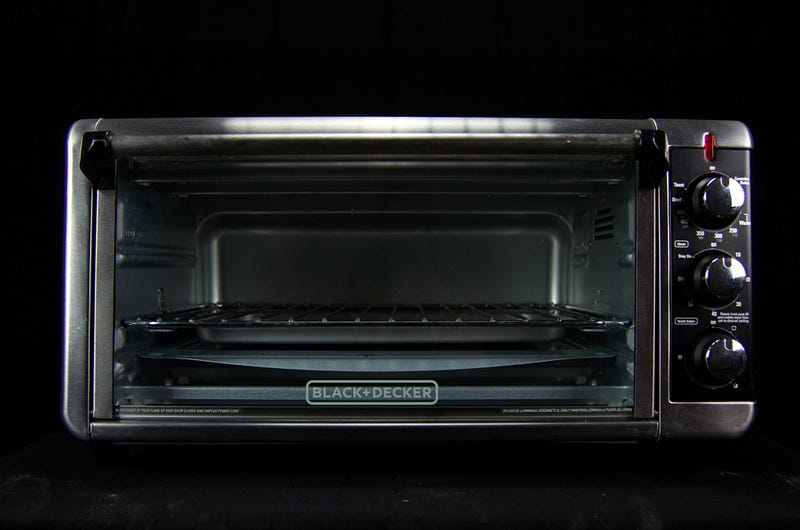
No doubt about it, this is an opinion piece. And like any opinion piece, there are going to be people who have different opinions. But my opinion is this: putting a microwave in your van is a dumb idea. Unless you have a lot of money, which most #vanlifers do not, it simply isn’t worth it.
To explain my position, I first need to teach you about how electricity works.
All electronic devices have a wattage, a measurement of the amount of electricity a device uses during operation. All batteries are measured in terms of watt-hours, which is the number of hours a battery can power a watt of energy. That means an electrical device that measures 100 watts can drain a 1000 watt-hour battery for 10 hours before it is fully depleted.*
One other thing you must understand is the energy cost of converting from DC to AC power. Most people are familiar with the AC and DC conflict between Edison and Tesla, thanks to a couple of sticky memes from around 2012.
The difference is basically this: DC energy is very easy and safe to use, but deteriorates over long distances, while AC power is not very usable and much more dangerous, but does not deteriorate over long distances. Every electronic device you own or that you have ever seen in your life runs on DC power, and every battery, generator, and power production system in the world produces DC power, but the power lines that get power from the power plant to your home are AC lines.
For this reason, nearly every electronic device sold comes with a little power inverter. Do you know the brick that is always on your laptop charger cable? Or the little wall-to-USB bricks that come with phones? These are AC-to-DC inverters. On fixed appliances like toasters and microwaves, the inverter is inside the device, but it is still there, converting your house’s AC power to DC. The power it takes to run this inverter is about 20% of your electronic device’s power usage.
In a camper van, however, your battery system is DC power. Since your microwave only accepts AC as a power source in its AC-to-DC conversion, you now need a DC-to-AC inverter for your battery. This inverter also costs about 20% of your power usage. Running a 100-watt device on a DC-to-AC inverter will cost you about 110 to 120 watts on your battery, so your 1000-watt battery will really only run about 8 hours.
Until now, I’ve been giving you examples in terms of 100-watt devices and 1000 watt batteries. The reality is, though, that while 1000 watt batteries are fairly easy to find (a 1000 watt battery and inverter setup will cost you between $700 to $1000), most appliances are not 100 watts. They are at least 1200 watts. An electric burner is about 1500 watts. A space heater, 1000 watts. Your microwave, 1000 watts. You will be able to power your microwave for no more than an hour before your battery is totally depleted.
But who uses a microwave for more than an hour a day, right? That seems fine… except it’s not. That same battery needs to power your phone(s), laptop(s), lights, and your 12v fridge, which will dramatically vary on energy requirements depending on what kind of climate you are traveling in.
Also, if you own a microwave, it’s safe to assume you want to microwave some frozen meals as well, which means you’ll need a 12v fridge/freezer, which will take yet more energy. Most battery and solar configurations on the market in the $1200 range take up to 10 hours to fully recharge a battery, so you really only have about 300 watt-hours of wiggle room on any given day (less if it’s been a cloudy day).
Here is where the math gets sticky: there does not exist a microwave that only requires 300 watt-hours.
If you want to increase your battery capacity to 3000 watt-hours (and correspondingly increase your daily charging capacity), it’s possible to build a van that will run a microwave (as well as other kitchen appliances). But these kinds of systems easily run $3000+ and require a fairly sophisticated understanding of electrical systems, and most aspiring #vanlifers simply don’t have this in their budget.
And you know what? Even if you do have this in your budget, I don’t think this a great way to spend it.
One, space in a van is at a serious premium. Every square foot needs to justify its existence. If your diet is anywhere near healthy, you use your microwave no more often than once every few days. (unless you’re using it to reheat leftovers, which, in a van, is probably better done on the burner on which you made the food in the first place). A microwave simply doesn’t justify the space it takes up.
Two, I think microwaves are antithetical to what you’re trying to do by traveling the country. If you’re spending all this time and money to travel the country and see the sights, I recommend just putting your $3000 into a food budget and buying local takeout instead. It’s going to take you at least 6 months to chew through that budget, even if you eat takeout for every meal, and you’re going to be glad you invested it in hot and kitchen-prepared food instead of frozen kibosh.
That’s to say nothing, of course, of the nights you’ll want to cook dinner over a fire, looking up at the stars. Your microwave will pale in comparison next to that.
That is to say, if you’re really having fun, you’re not going to use your microwave anyway.
My microwave-related ire isn’t really about microwaves. It’s about every appliance of convenience people want to stuff into their vans, from microwaves to heaters to air conditioners to coffee makers to instant pots.
I don’t think people should be doing this. I think people who are trying to stuff every home-based convenience into their van are deluding themselves about what it means to live out of a camper van.
There are people with camper vans that have all the conveniences of a home. Those people are disgustingly wealthy. Most of us cannot afford a camper that comes in over $30,000, and for $30,000, whatever you buy/build is going to have some major lifestyle differences compared to living in a house. For starters…
- Even the nicest, fanciest camper van is still a fucking small space in which to live. You will never feel like you have enough space to maneuver. Anything which requires more than three square feet of space — which includes everything from dressing to putting on makeup to cooking — will become ten times more of a pain in the ass.
- You will always have to watch your resources. You will develop new regions of the brain dedicated solely to mentally keeping track of your potable water, gray water, toilet status, electricity flow, fuel level, and everything else besides.
- If you are the kind of person who likes shopping or thrifting, buying new foods just because, doing your makeup, cooking complex meals, or any other space-intensive hobby, you will (probably) suddenly lose the desire for that hobby after about six months of van living — and you won’t even care. You’ll be busy doing other cool stuff instead.
This isn’t to say living in a camper van is roughing it. It’s in between; you have a place to sleep that is perfectly comfortable, but the air temperature in the morning varies depending on the weather. Some days I got out of bed early because it was too hot to sleep, and other days I stayed in bed longer than normal because it hadn’t warmed up yet. I couldn’t take on elaborate projects to home-cook Vietnamese Pho or Vegan Pastries or who knows what because I didn’t have the cooking resources required. My meals were simple and my comforts were basic. It was hardly suffering, but it was not like living in a house.
Living the #vanlife is (or at least, has been for me) one of the most enjoyable and rewarding things that can be done. But if you expect it to be as comfortable and convenient as living in a house, you’re going to be disappointed. I think everyone who is trying to shoehorn a microwave into their van is going to be disappointed by #vanlife because they’re trying to make it into something it’s not. Go into #vanlife with the right expectations and you’ll have a great time, but go into it with the wrong expectations and you’ll end up spending all your money and regretting it.
Don’t spend all your money on a microwave you won’t even have the electricity to use. Go into town, buy some tacos, and talk to the locals instead. You won’t regret it.
If you want more stories like this, sign up for my weekly digest.
*We are assuming the battery is a Lithium-ion battery, the only type of battery that can be safely and repeatedly drained to 0%. Most batteries, like the lead-acid batteries used in your car, can only be drained to about 50% before they stop being functional. Moreover, these cheaper and more common batteries don’t have linear battery drain patterns. There are a lot of complexities in the science of batteries; it is a lot more complicated than watching your phone charge go from 100 to 0.
Enjoy this kind of writing?
I send one email a week about AI, intentional living, and doing meaningful work in a world that won't stop changing. Join 700 other subscribers.
Keep Reading
Your Clothes Use More Water Than Your AI
The environmental case against AI doesn't survive contact with the data
Apps Will Soon be Replaced by AI
The first new computing interface in sixty years doesn't need them.
AI Is Building the Biggest Porn Machine in History
The industry that monetizes child rape videos just got mechanized production