The Most Underrated Writing Skill: Reading Your Work Out Loud
When I first read this tip in a writing book, I was mortified.
Read my work out loud to myself? I thought. I can’t even stand it when other people read my writing.
It’s true. When people try to read my articles out loud where I can hear, or if I even see one of my articles on a friend or family member’s screen, I cringe. Sometimes I’ll even run out of the room. I’m fine with all of my writing being available on the internet for all to see, but please read it on your own, where I can’t see it happening. So when the author of this writing skills book told me to read my own work out loud to myself, I thought I’d rather swallow stones.
But, I wanted to be a better writer more than I wanted to avoid the pain of hearing my own work, so I grit my teeth and did it. After finishing the final draft of articles, I started reading them out loud to myself.
At first, I felt like I would rather be doing anything than sitting here stupidly sounding out every word of every sentence I wrote. But as I worked through my drafts, sentence by sentence, I noticed something magical happening. My articles were getting a lot, lot better.
For most of human history, reading was only done out loud. All documents, no matter their purpose, were always read out loud. Most documents were read to a group of people. If you wanted to read something alone, you had to find a quiet area where you wouldn’t disturb anyone by reading out loud to yourself.
Reading was done out loud because writing was understood to be the act of putting your voice on paper. It did not occur to ancient readers to try to read things in their heads because you can’t hear someone talking without hearing something, dummy.
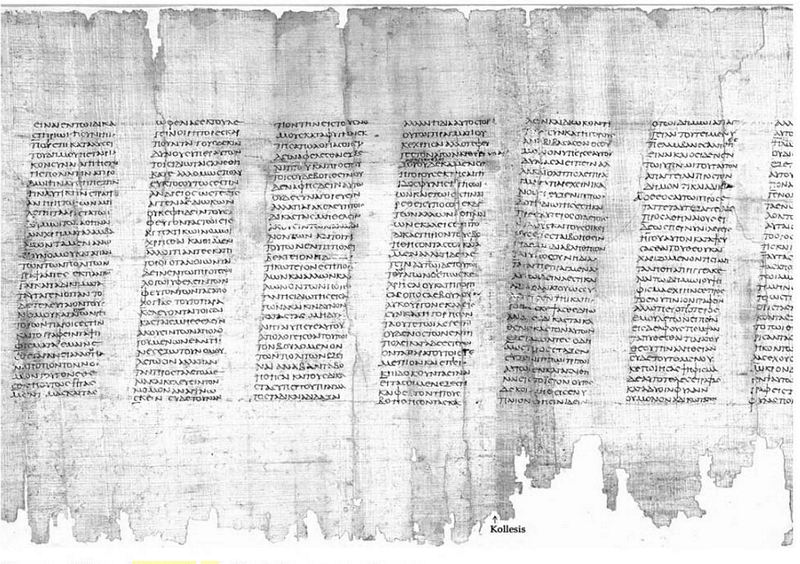
The nature of writing reflected its purpose. For thousands of years, there were no gaps between words or sentences. Where one word ended and another began was implied. It was only by vocalizing the letter sounds that a reader could understand which words were which. Without vocalizing the writing out loud, it was virtually impossible to understand.
The technology of writing has evolved since then. We added spaces between our words and sentences, and we started using punctuation marks to indicate timing to readers. But, writing is still essentially the act of putting a voice on paper. Writing is nothing more than a simulation of talking, the truly instinctive thing for humans to do.
It’s no wonder, then, that writing that’s never been read out loud can be a bit funky. If no actual voices are involved in the production of a piece of writing, it’s been abstracted away from its true source.
For this reason, reading an article aloud can reveal awkward pauses and struggles with a sentence construction that might slip by a writer as they silently compose their work.
As a writer, this is fantastic news. Reading my work out loud to myself is like waving a magic wand that can reveal sophisticated construction errors that tools like Grammarly and Hemingway will always miss. Reading your work out loud to yourself can transform boring sentence construction into prose people will love reading.
Next time you’re editing your own work, try it out for yourself. Find a quiet room where you won’t embarrass yourself and read your own writing at the same volume you would use when talking to someone else. When your tongue stutters across a sentence, or something sounds wrong to your ear, congratulations. You found an error you would have otherwise missed.
This isn’t the same kind of error as a comma splice or misused period. This is the kind of error that linguists notice, an error that makes the difference between an alright piece of writing and a great one. Our instinctive ability to understand spoken language causes us to catch these errors, even if we don’t understand exactly what the error is.
When you find errors, rework the sentence and start again. Do this enough times, and you won’t hear any more errors in your work.
This neat trick has taken my writing to the next level (when I care to use it).
There are three ways I edit my work:
- Reading it out loud to myself
- Using Grammarly
- Not editing at all (gasp!)
To be perfectly frank, I don’t edit most of the articles I write for Medium. My natural English skills are good enough for most of my readers not to notice, and it doesn’t matter much anyway because most articles drop out of the algorithm’s distribution cycle within a week.
Sometimes I’ll feel guilty about this, and start giving things a more thorough run through Grammarly, but that doesn’t make much of a difference either. It makes some of my sentences less wordy and catches some grammatical errors, but that’s about it.
Reading my work out loud, though, has had a transformative effect. It doesn’t just help me polish up the edges of sentences or avoid the phrase “a lot.” It transforms the structure of my writing. Often after reading work aloud to myself, I find myself rearranging entire paragraphs and concepts into an order more pleasing for the reader.
The difference between articles I didn’t edit and articles I edited using Grammarly is minor. They are both okay. Articles I’ve edited by reading aloud to myself are markedly better than the other two. Reading aloud produces quality articles that truly make me proud.
If you’re a writer, the notion of reading your own work aloud to yourself may feel like swallowing stones. That’s okay. Learn to do so anyway. It may transform your work.
Want to Make Your First $100 on Medium?
Making money on Medium can be challenging to figure out. With my Make Your First $100 on Medium course, you’ll learn everything you need to know in less than 10 days.
Enjoy this kind of writing?
I send one email a week about AI, intentional living, and doing meaningful work in a world that won't stop changing. Join 700 other subscribers.
Keep Reading
Your Clothes Use More Water Than Your AI
The environmental case against AI doesn't survive contact with the data
Apps Will Soon be Replaced by AI
The first new computing interface in sixty years doesn't need them.
AI Is Building the Biggest Porn Machine in History
The industry that monetizes child rape videos just got mechanized production