Why I’m Beginning to Wonder If Big Businesses and Billionaires Are Evil
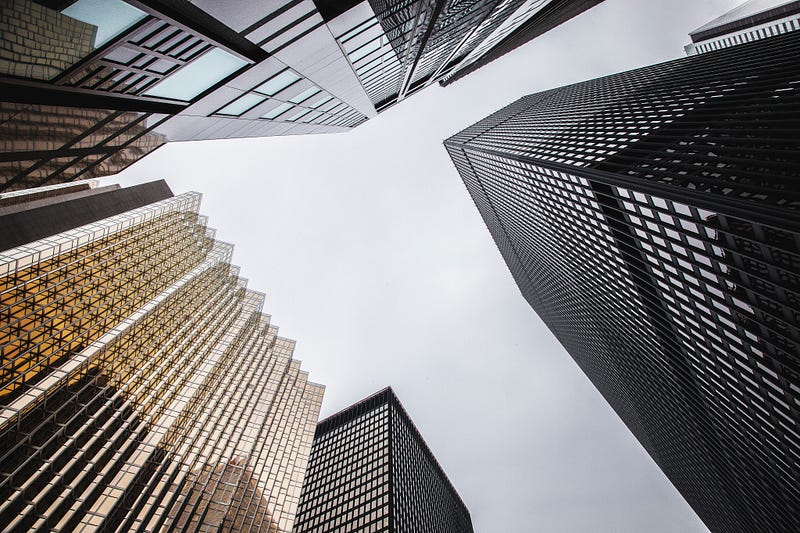
I’ve been an avid reader for a few years now, but ever since 2021 began, I’ve been reading even more than usual. We are not even halfway into February and I have already read 14 books, watched 20+ documentaries, and read countless internet articles. The bulk of my day is spent learning. I’ve been learning about topics like…
- Personal finances, budgeting, economics, the stock market, market crashes, and investing.
- The environment, climate change, ecosystems and their interdependence, species variation, the history of the biosphere on earth.
- Psychology, mostly psychoanalysis and modern therapy techniques.
- Modern-day slavery and humans rights violations.
- Pharmaceutical companies, big medicine
- Racism, police bias, the industrial prison complex.
What I’m about to say is not politically correct. It’s not nuanced or subtle. It’s the kind of statement that sophisticated intellectuals are supposed to shy away from. But sophisticated intellectuals are supposed to seek the truth wherever it may be found, so what am I supposed to do? Not point this out because it seems politically incorrect?
Anyway, what I want to point out is that I’m noticing a disturbing trend. No matter what I study, the terrible things involved — be it toxic positivity from psychology, over-incarceration of black men, or the 2008 stock market crash — are all caused, in the end, by big business.
- The clothing industry is rife with slavery and environmental destruction because the fast fashion companies at the top profit from slave wages and environmental abuse.
- The environment continues to erode at an alarming pace because large corporations are running unsustainable operations across agriculture, fishing, dams, and more.
- The stock market crash of 2008 was enabled by banks that committed fraud by knowingly selling high-risk investments and marking them as “low-risk.” When these high-risk mortgages failed, every other “low-risk” investment based on them failed as well, creating a cascading failure.
- Present-day wealth inequality continues to grow and be enabled by deregulation across the financial sector and other corporate industries.
- All these things are possible because of a huge lobbying industry in Washington. Lobbies are so powerful in D.C. that when the majority of American citizens support a particular bill, there is only a 30% chance of it being passed — but when a lobby supports it, there’s a 60% chance. Combined, the power of the lobbies dwarfs that of American citizens, making our government essentially a sock-puppet for any company large enough to fund a lobby.
Look. I don’t want to be seeing this trend. There’s still a big part of me that’s a good red-blooded Republican who loves business in all its forms.¹ Years ago, whenever lefties tried to tell me multinational corporations were responsible for so many of society’s ills, I laughed them off. I thought they were assigning too much organizing ability to people who couldn’t even manage to keep their meetings short.
But the more I read about the world around me, the more I find that issue after issue seems to come back to, in the end, some big business trying to exploit something for a profit.
Private prisons exploit systemic racism, fast fashion exploits the poverty of overseas workers, big agriculture exploits domestic family farmers, commercial fishing exploits vulnerable ocean habitats, financial markets exploit hard-working middle and lower-class people’s savings… around every corner I discover a new way faceless corporations are exploiting the rest of us for a profit.
They shouldn’t be able to do this, of course. But the lobbying industry has grown so large that a business can often just buy whatever legislative exception it needs. This has resulted in a veritable sea of subsidies and exceptions for people who absolutely don’t need them, which leads to ridiculous situations like billion-dollar businesses paying $0 in taxes.
I’m not going to lay this at the feet of Trump, or any other recent president, because corporations have been consolidating their power for a long time now. As far as I can tell, businesses have been slowly, subtly, under our noses, consolidating their power since the late fifties.
It started slowly, of course. An exception here or there. A tax break for struggling businesses, of course. All of it seemed reasonable.
Some of the signposts along this road have been:
- Reagan’s economic policies of cutting taxes for the rich and deregulating business, which may have been successful in the short run, but in the long-run laid the foundation for mounting wealth inequality.
- The Glass-Stegall Act, a bill passed in 1933 following the Great Depression designed to require banks to act responsibly with people’s savings, was effectively repealed in 1999, allowing banks to play fast and loose with people’s retirements and paving the way for the 2008 market crash
- And on the subject of the 2008 market crash, the subsequent bailout preserved the wealth of the bankers at the expense of the common man’s retirement — and did not include any legislation that would prevent such a thing from happening again. (Many analysts believe we are headed for a similar crash sometime soon).
- The 2010 supreme court decision to allow businesses and labor unions to donate as much money to campaigns as they want, which effectively allowed corporations to “buy” legislators.
Each individual step seems reasonable, and I can see why each one was taken. Consider the 2010 supreme court decision. I was in favor of this when it happened because my gut instinct is to say “People are allowed to spend money on whatever they want however they want. Free market.” But the sad reality is that when businesses are allowed to use their profits to buy politicians, those politicians will give those businesses favorable treatment, and then the market is no longer free. Because corporate financing creates an unfair market, anyone who truly supports a free market must oppose the ability of corporations to influence government policy.
Even the Glass-Steagall act being repealed makes a kind of sense to me. It’s not like Congress knew 2008 would happen that way, after all. They probably just wanted to give banks greater freedom and assumed greater operative freedom for the banks would mean greater prosperity for those who bank with them.
But this sort of reasoning implies that the “invisible hand” of the free market is still the best way to run an economy. As the reasoning goes, any move toward an unregulated market that allows the invisible hand to work its magic is a good move. But the reality is, Adam Smith has been dead a long time, and we’ve discovered a lot since he wrote The Wealth of Nations.
- For starters, we now know humans are far less rational than previously thought. In Smith’s day, products were advertised using rational arguments about why a given product was the best, but in our day, corporations prey on our irrationality by marketing products using sex, drugs, desperation, and pretty much anything but rationality.
- We also have a much more complicated market than Smith did. Yes, large corporations such as the East India Company certainly existed, but there was no such thing as a “derivatives market.” Fiat currencies existed, and governments sometimes issued them during war or economic crisis, but they weren’t in mainstream use. Loans existed, but only a fraction of people had one. Mortgages didn’t become common in America until the 1940’s.
How does this affect the invisible hand? Well, the “invisible hand” in economics is a colloquialism for the invisible sum of all the actions of the actors in an economic system. If all the actors in an economic system fully understand all the variables and always make a rational decision, the invisible hand is a great way of running an economic system. But with incontrovertible proof that we are not rational actors, and a market system so complex that even experts can’t understand all the factors at play, the invisible hand is likely to produce a result that reflects the biases and limitations of the actors.
And to my amateur eye, that’s what we seem to have. Corporations that prey on our psychological weaknesses and financial systems that take advantage of our limited knowledge flourish, at the expense of the environment and impoverished people everywhere, while we are too busy just trying to eke out a living to figure out what to even do about it.
As a result, I increasingly find myself siding with people who say things like “eat the rich.” The invisible hand clearly doesn’t work as well as we thought it did, but the people who are now at the top are continuing to solidify their position at the top, and they’re making the rest of us pay the price.
I have to end this article by pointing out I am a rank amateur. I am literally a twenty-five-year-old who just read a few books, watched a few documentaries, and gave it all some thought. Even what little I do know has been simplified in this article for the sake of readability. In doing so, I’m sure I’ve misrepresented at least one or two things. If you see somewhere I went wrong, please take to the comments and correct me.
But if I’m at all right, even a little bit, we’ve got a big corporate problem on our hands.
Want More Great Articles?
If you want to read more thought-provoking articles like this one, my weekly digest is just the thing for you.
Click to join my Weekly Digest today!
1: A Libertarian, really. I have always favored entrepreneurship, capitalism, and the freedom of people to participate in the market however they want.
Enjoy this kind of writing?
I send one email a week about AI, intentional living, and doing meaningful work in a world that won't stop changing. Join 700 other subscribers.
Keep Reading
Your Clothes Use More Water Than Your AI
The environmental case against AI doesn't survive contact with the data
Apps Will Soon be Replaced by AI
The first new computing interface in sixty years doesn't need them.
AI Is Building the Biggest Porn Machine in History
The industry that monetizes child rape videos just got mechanized production