Why Most People Waste Their Money
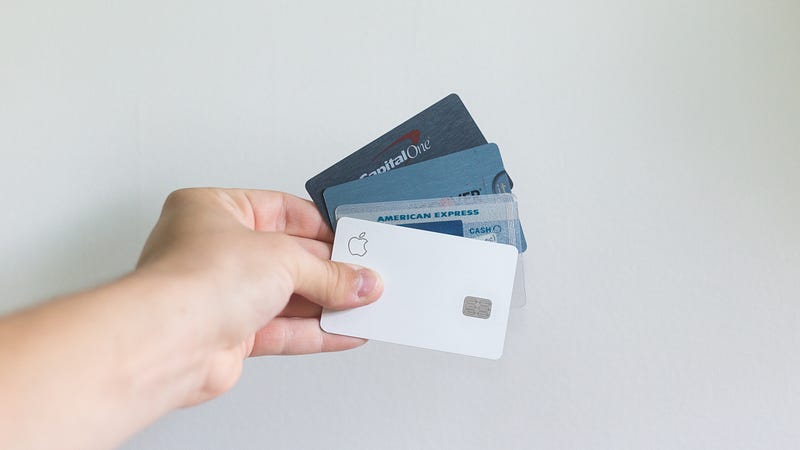
I’m just going to say it. Most people waste a lot of their money. You probably do too.
Here are the three reactions I expect people to have to this statement, based on how people have reacted to me when I say it in real life:
- Some people who become enraged. They say “Excuse me? I waste my money? Have you even seen how I spend my money? Have you seen the situation I’m in? How dare you! I couldn’t build savings if I tried!”
- Some people who openly admit this is true. They say “Yeah, I spend a lot on X/Y/Z that I shouldn’t.”
- A small fraction of people don’t waste their money. They say “Yeah, I used to waste a lot of money, but then I learned about how to budget and make spending plans, and now I’ve got a healthy amount of money in my savings. How do you budget? Let’s compare notes.”
Unsurprisingly, there’s a correlation between people’s reactions and how they track their fiscal situation.
- People who become enraged often have haphazard tracking systems. They just glance over their bank transactions as they happen, or they look at an expense pie chart generated automatically by their bank, and that’s good enough for them.
- People who know they spend too much have tried to implement expense tracking systems and use budgeting apps to manage their fiscal situation, but it just doesn’t seem to stick for them.
- People who have mastered their financial situation regularly check their expense tracking systems to assess their financial situation and chart a course for the coming weeks and months.
In other words, the people who are happiest with their financial situation are those who regularly check and analyze their expenses.
Most people waste money because they do not know how to assess their expenses to make sure they are not. While they’re looking the other way, their money slips through their fingers like water from a sieve.
How to Assess Your Expenses
It’s not that most people are lazy or irresponsible. Most people don’t assess their expenses because they don’t know how! Their parents didn’t know, so they didn’t teach their children how, and those children grow up into parents who don’t know, so they don’t teach their children, so on and so forth. Just a few generations ago, nobody even needed to know how to manage money, so it makes sense that it has yet to become an intergenerational, cultural skill.
But thanks to the internet, you’re going to learn how today.
First, get set up with an expense tracking system. I recommend Mint by Intuit, but if you open your phone and google “budgeting app,” any of the wonderful apps that pop up will likely be just as good. You can even use the budgeting tools provided by your bank’s app if you want. All you need is an app that will track all your expenses, sort them into categories, and then make pie charts or other expense charts of the results.
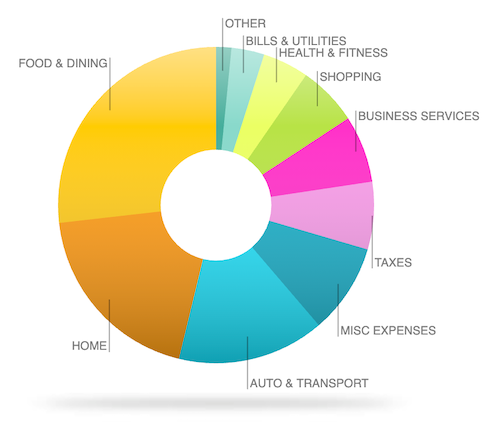
Go over your expense categories, from highest spending to lowest spending, and ask yourself these questions:
#1: What outcome am I trying to get from spending this money?
We spend money because we’re hoping to get something from it. This is true whether we are consciously aware of what we are hoping to get or not.
One of the things that separate people who don’t waste money from those who do is that they are aware of what they are trying to get when they spend money.
For instance, I buy roughly several hundred dollars’ worth of takeout and restaurant food every month from vegan and gluten-free restaurants. Many people might see this as a frivolous expense, but I know exactly what I want from spending this money. I want:
- Food that is both extremely healthy and safe for me to eat despite my many food allergies. What do you have if not your health?
- Food that does not take me several hours to prepare at home. I’m not willing to spend 2+ hours a day making myself vegan and gluten-free food at this point in my life.
Vegan cafes, taquerias, and Vietnamese restaurants achieve these goals for me. Thus, my spending on food from restaurants like these is money well spent.
People who know I’m money-conscious often make fun of me for choosing expensive vegan cafes instead of going to Wendy’s, but going to Wendy’s wouldn’t fulfill my purpose for spending this money, which is to get healthy quick food, so for me to spend money on Wendy’s would be for me to waste my money.
For every expense category (and even some sub-categories), ask yourself what your desired outcome for the expense is. Why are you spending the money at all?
#2: Is this outcome something I want for myself?
Eating healthy food and saving myself many hours of prep time is an outcome I want for myself. I want to spend money to get it. But what about when the outcome we’re spending money for is not something we truly want?
Consider clothing expenses. I don’t spend much on clothing anymore, but I used to spend about $4,000 a year on clothing from malls and up-to-date fashion shops.
What was I trying to get out of spending all this money on clothes?
Well, I wanted to look like Esther Quek in one of her signature suit looks.

More generally, I wanted to look like an exceedingly well-dressed androgynous fashion icon. I was still insecure about my gender presentation and trying to make up for it by outdressing everyone I met. Essentially, I was trying to buy the feeling of feeling good about the way I looked.

It took a few years of this nonsense for me to realize that was a ridiculous outcome to aim for because people can’t buy feeling good about themselves. No amount of cool androgynous clothes would ever make me feel good about being nonbinary. That was something I had to give to myself free of charge.
My hair isn’t blue anymore and I don’t have a closet full of new clothes. I know that feeling good about myself comes from the inside, not from sparkly distractions on the outside.
Think about what you’re trying to get when you spend money. Are you truly getting what you want when you spend money? Or are you spending money in an unconscious attempt to soothe hurt or supply happiness you didn’t even know you needed?
#3: Is there a more efficient way to get this outcome?
In the course of running a small blogging business, one can rack up many recurring expenses. There’s your website hosting, your business email address, your email platform, your financial software, your internet and phone charges, your monthly payment on your laptop and phone, and that’s just for starters. It’s very easy for business owners who are not watching their expenses like a hawk to rack up hundreds of dollars a month in maintenance charges.
For this reason, I regularly sit down and ask myself whether there is a cheaper way to achieve the same business outcome.
The last time I did so, I realized I was paying way more in hosting fees than I needed to. I was paying $12/mo. (or roughly $150 a year) for a hosting package for my personal website monthly. With just a little Google searching, I learned that a different web hosting provider could provide me the same hosting package for only $3 a month if I were willing to pay for 3 years upfront. The upfront price? Less than $150. Cha-ching! I just saved $290 on my web hosting fees.
You probably don’t run your own small business, but you have lots of recurring expenses. You pay for your internet, your phone bill, your gas line, your auto fuel, your food, and much more besides. Unless you are ruthless about frugality, there is probably a cheaper way to meet your needs.
Consider your phone bill. Unlimited data and service plans cost roughly $100 a month. Most of us spend most of our time in places with Wi-Fi access, so dropping down to 10GB of data wouldn’t impede your ability to watch YouTube, but it would put $1,200 back in your pocket that you could save to take a vacation. Is having unlimited data really worth a ski trip or beach vacation every year? Or would you, honestly, be able to get along with 10GB a month just fine?
Here’s another example. Nine years ago, I worked for Best Buy as a PC sales representative. It was my job to sell the most expensive computer I could to every customer that walked in the PC department, and package a Geek Squad care plan with it. As you will soon learn, I was not good at this job.
Not everyone understands computer specs, but everyone understands car brands. Introductory computers are like a Toyota Corolla; they get you where you’re going. Mid-range computers are like Mustangs; they’re more expensive than necessary, sure, but they are fast and fun. Top-of-the-line computers are like Ferrari’s; no one needs them and you only buy one if you’re having a midlife crisis or are a nutcase.
Computer buyers, though, are not like car buyers. For some reason, 95% of computer buyers are convinced they need a Ferrari and are willing to max out their credit cards to get one. Even though it was my job was to sell expensive computers, my conscience drove me to regularly stop and convince customers not to max out their credit card on a $3,000 computer when an $800 one would do just fine. I was fired after six months.
Most $800 laptops will last you four years through college. Most $800 desktops will play nearly every PC game currently available, including processor hogs like Assassin’s Creed. Most $30 headphones will sound just as good as their $230 counterparts.
This effect carries over into other industries. Most $20 jackets will keep you as warm as most $200 jackets. Most $50 shoes will keep your feet as protected as $300 shoes. Most $1 canned soup will be as healthy and filling as $5 canned soup. You get the picture.
By The Way, Don’t Fall For Marketing Schemes
A substantial amount of money spent in the American economy is spent trying to convince Americans that we need to spend more money in order to get the result we want. Don’t let them fool you. Research all the options available on the market and find the cheapest option that still gets you the outcome you want.
The most efficient way to use money is to spend as little as possible to get the outcome you want. If you spend more money than you need to spend, or you spend too little and don’t get the outcome you want, you haven’t used the money tool well.
People often waste money because they were tricked by marketing professionals. The marketing professionals convinced you that you needed heated seats and OnStar service when originally all you wanted was a fuel-efficient car to get you to work. They also convinced you it would be a good idea to upgrade your phone via a product press release when originally you had no intention of replacing your perfectly good current phone.
If you didn’t want something before a marketing video or sales professional told you about it, chances are you don’t need it. If you did, you would have known about it before a marketing professional told you.
In Conclusion
If at the end of this article you’ve realized you’ve wasted a lot of money, don’t beat yourself up about it. I’ve already admitted to my perilous fashion shopping habit, so you know I’m not perfect. I’ve also been guilty of spending $3,000 on a computer I didn’t need.
If you want to feel upset with someone, feel upset with the marketing industry. Big business in the US created the modern marketing industry, which in turn stoked the human instincts that gave rise to superficiality and consumerist culture. You were indoctrinated into wasting your money before you even had a chance.
But now you know better. You don’t have to fall for their tricks anymore, and you don’t have to watch your spending get away from you. You can use money like it was intended to be used: as a tool to help you get other things you want. Nothing more.
Want to Read More?
If you want more thought-provoking articles like this one, my newsletter Seeking Truth was made for you.
Enjoy this kind of writing?
I send one email a week about AI, intentional living, and doing meaningful work in a world that won't stop changing. Join 700 other subscribers.
Keep Reading
Your Clothes Use More Water Than Your AI
The environmental case against AI doesn't survive contact with the data
Apps Will Soon be Replaced by AI
The first new computing interface in sixty years doesn't need them.
AI Is Building the Biggest Porn Machine in History
The industry that monetizes child rape videos just got mechanized production