Why Using a Flip Phone Did Not Work for Me
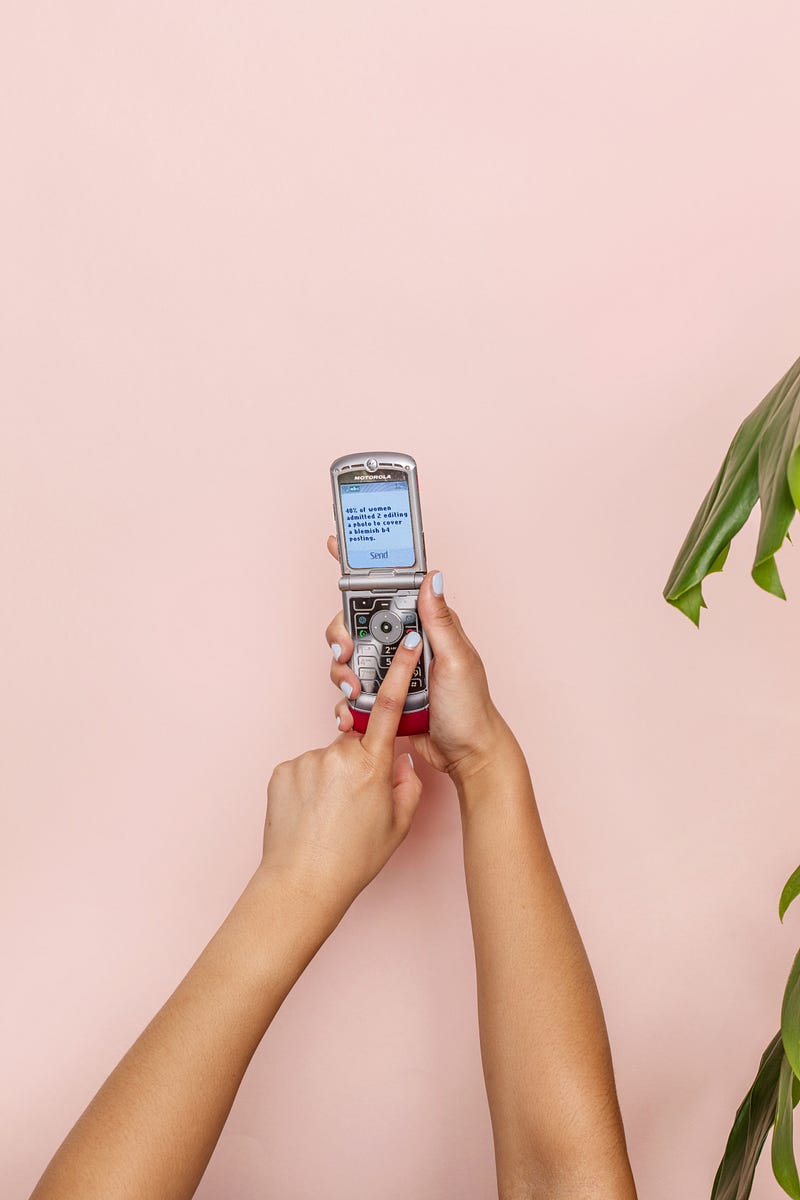
In December, I ditched my iPhone 12 Mini (which is to say, I put it in a drawer in my desk) and started using the AT&T Cingular Flip IV, a 5G LTE flip phone. I then wrote a long, beautiful, and widely-read article about why smartphones are overkill and why a lot of us would be better off with a flip phone.
I made it about a month with that flip phone before having to go back to my iPhone.
I was not happy about it. I loved the flip phone’s week-long battery life, I loved that people had to call me instead of sending endless discursive text messages, and I loved that it was little and fit easily in my pocket. It also discouraged me from trying to use my phone while driving, a nice bonus. But it was missing a few key features.
My Alarms Weren’t as Useful Anymore
It didn’t occur to me how much I relied on my smartphone to remind me to do stuff until I didn’t have my smartphone anymore. I used alarms throughout the day to remind me to do various tasks, I used Medisafe to remind me to take my medication, and I used Siri to set new alarms throughout the day as I needed them. Without a smartphone, I couldn’t do any of that.
Sure, the flip phone had an alarm system, but it was a pain in the ass to use. Setting an alarm required using the keypad to navigate the OS, which, no matter how well-designed the OS is, is always substantially slower when using a T9 keypad.
This wouldn’t be a problem for someone who doesn’t regularly set new alarms. The flip phone was able to do regular alarms on a daily or custom schedule, just like a smartphone, so if all your alarms go off at the same time every day, it’s fine. It’s only difficult to add new alarms on the fly to help you remember to get things done.
My To-Do List Was Out of Reach
It didn’t occur to me until I got rid of my smartphone that I actually do use the to-do list app I had on there. I didn’t use it to manage or complete my to-dos, but I used it as a way to enter new to-dos. I had to carry a separate little notebook with me to write stuff down. This wouldn’t be a problem for someone who carries a purse or day bag, but I am not one of those people.
The flip phone I had came with KaiOS, which had a plethora of to-do and reminder apps on the KaiOS store. It would have been possible to set this up with one of those apps. But I already had a to-do app I like very much called TickTick, and I wasn’t about to give TickTick up. I have some complaints about TickTick, but it bundles habits and to-dos together, and I like that feature so much I’ll take any annoyances that come with it.
It Was Inconvenient In Emergency Situations
I don’t make a habit of keeping email on my phone. But a few times, I showed up for therapy only for my therapist not to be there, and I found myself unable to download my email app to check whether they canceled the appointment or not. I didn’t find out the appointment was canceled until I waited twenty minutes and they didn’t show up, went home, and checked my email there.
There were also times I forgot my wallet and needed to access my credit card information but couldn’t, needed to check bank balances on the fly, or do other little tasks of life. I found myself borrowing my boyfriend’s phone to do these things.
Google Maps Didn’t Work Well
This was the feature that ultimately moved me to start using my iPhone again.
KaiOS has Google Maps, and if I were truly well and lost, that version of Google Maps could save my life and get me home — but it wasn’t easy to use on a day-to-day basis.
It worked like this: You put in your address (a somewhat painstaking process), confirm your destination, hit OK, and it found your location and generated turn-by-turn directions. It did not track you wherever you went, meaning it didn’t track where you were on your route, remind you of upcoming turns, or reroute in case of an emergency. It was like using directions that were printed on paper.
Again, fine in an emergency, and a true blessing to someone who’s impoverished and can only afford a $20 phone, but I’m not so poor I can’t afford a phone that has a fully operational version of Google Maps.
The tools we use are supposed to improve our lives. There were a lot of ways in which using a flip phone improved my life, but as you just read, it also made my life more difficult in several ways. This tool was not, on par, improving my life, so it had to go.
A Side Note: People Didn’t Want to SMS Message Me
Texting was easy on KaiOS, both because predictive text technology has improved a lot since the nineties and because Google’s voice-to-text assistant was on KaiOS. It was impossible to view photos on the 2-inch screen, but I didn’t want to spend my life craning my neck to look at photos anyway. This wasn’t a problem for me.
But other people did! They didn’t stop sending me memes, photos, and videos because I’d chosen a different way of life, and they didn’t stop expecting me to look at what they’d sent either. I found myself saying “I won’t be able to look at that unless you email it to me and I get home to check” on a regular basis. Which I have always preferred because I don’t want my attention interrupted so someone can pipe a meme to my phone.
Because I had a phone that literally couldn’t accept photos, they did eventually learn to email me stuff that was more than just coordinating hangouts, but they tended to act like I’d inconvenienced them personally. I actually thought I did, at first! But I didn’t, since sending an email on a smartphone is as easy as sending a text — the “Share” button works for both. The only “inconvenience” was changing expectations about when and how communication happens, which is something I’m allowed to do.
Then there were the times people wanted to use other messaging platforms and literally would not contact me if they had to do so via an ordinary text message or phone call. All they had to do was open a different app on their phone, but that was too much. I would say “fuck ‘em,” but so many people did this that it would be unreasonable for me to condemn them all.
I didn’t mind making people go through the “effort” of opening a different messaging app because it weeds people out, but any would-be flip-phone users should know this is something that happens.
What I’m Doing Instead: Getting an Affordable Smartphone
After all that, I unhappily went back to the iPhone 12 Mini, all the while cursing this dratted world that’s cornered me into using a hyper-expensive piece of glass to get pestered every day by multinational corporations. I looked longingly at the flip phone still sitting on top of my desk and wished it had all worked out.
But you know what? There are a lot of cheap smartphones in the world. Better yet, it isn’t 2015 anymore. A smartphone can be fast and feature-packed without being $800. I felt like my iPhone 12 Mini was affordable because it was the cheapest of the flagship iPhones and flagship Android phones are equally expensive, but a quick Amazon search reveals there are a lot of Android phones on the market a fraction of the price.¹ They’re made for people who are poorer, people who are in developing markets, people who break their smartphones all the damn time, and people who just don’t want to continue paying the steep cost of membership of the “up-to-date” club.
I’ve resisted trying phones like these for the last several years, but the other day, I picked out a $150 phone on Amazon and took the plunge.
I wrote this article not because I want to scare people away from trying a flip phone, but because I want to help people understand whether that would be right for them. Flip phones are surely the right choice for many people, and they won’t be able to make that choice if people like me don’t leave reviews and share their experiences.
I’m going to keep experimenting with my phone, computer, and peripherals. I’ve already found most expensive headphones barely outperform $30 headphones in the ways that matter, most people buy way too much storage, and most people only need the base model laptops manufacturers offer, so I’m excited to find out if cheap smartphones are good enough too. We’ll see.
Want to Break Your Phone Addiction?
If you use your phone way too much and you know it, my free email course Break Your Phone Addiction In 7 Days will help you stop once and for all.
Sign up for Break Your Phone Addiction in 7 Days now!
1: But I must confess I didn’t buy the iPhone 12 Mini because it was cheap. I bought it because it was small. The cheap-for-Apple price tag was a bonus.
Enjoy this kind of writing?
I send one email a week about AI, intentional living, and doing meaningful work in a world that won't stop changing. Join 700 other subscribers.
Keep Reading
Your Clothes Use More Water Than Your AI
The environmental case against AI doesn't survive contact with the data
Apps Will Soon be Replaced by AI
The first new computing interface in sixty years doesn't need them.
AI Is Building the Biggest Porn Machine in History
The industry that monetizes child rape videos just got mechanized production